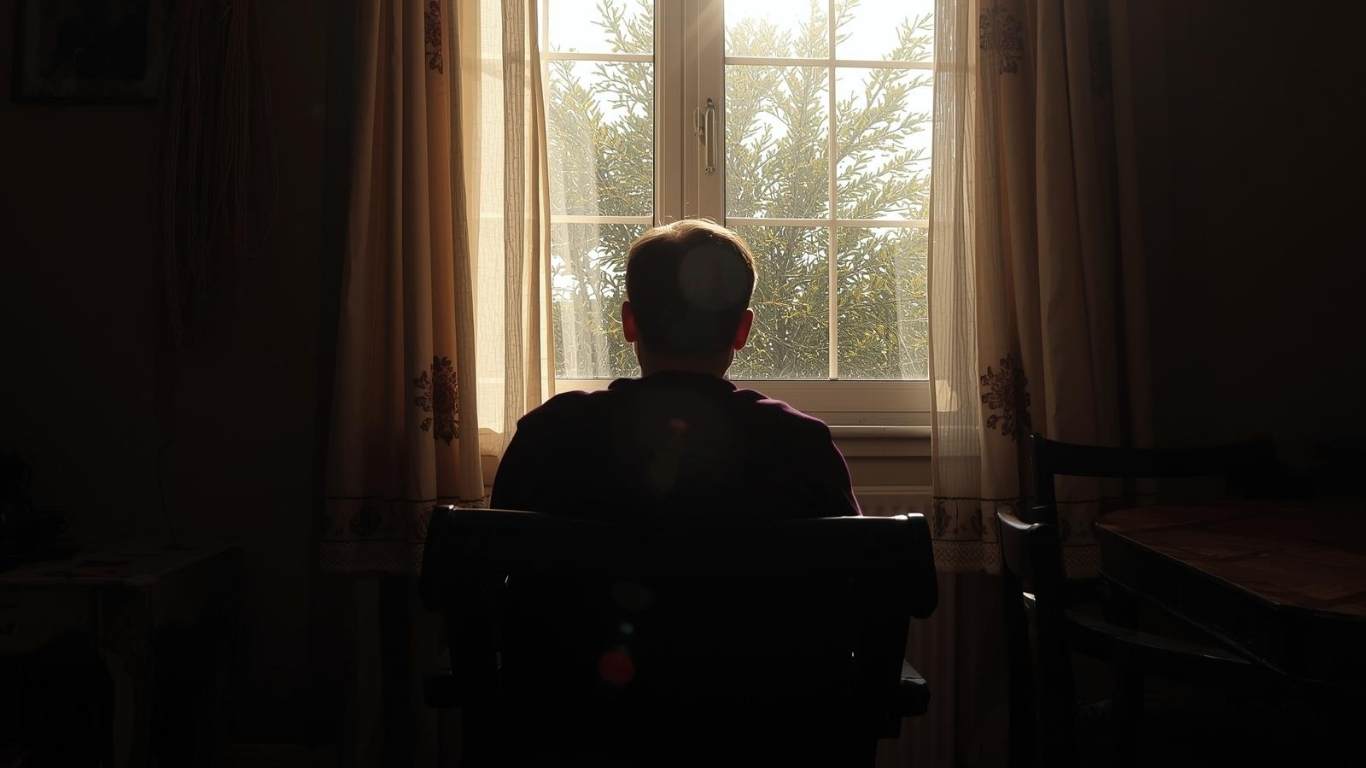
If you’ve been told you have anxiety, and you’ve also noticed yourself avoiding more and more situations, shrinking your world, or feeling unable to leave the house — you may be experiencing something more specific than general anxiety.
Agoraphobia and anxiety are deeply connected, but they are not the same thing. Understanding the relationship between them is key to finding the right kind of support.
Is Agoraphobia an Anxiety Disorder?
Yes. Agoraphobia is officially classified as an anxiety disorder in the DSM-5 (Diagnostic and Statistical Manual of Mental Disorders). But it is a specific type of anxiety disorder. One with its own distinct characteristics, diagnostic criteria, and behavioural patterns that set it apart from generalised anxiety, social anxiety, or panic disorder alone.
According to NIH’s StatPearls, agoraphobia is characterised by anxiety or fear in situations where escape may be difficult or help may not be readily available, and this fear is specifically focused on the possibility of experiencing panic-like symptoms or other incapacitating experiences.
What makes agoraphobia distinct from “general anxiety” is not just the what of the fear, but the consequence it produces — a pattern of avoidance so powerful it can eventually confine a person entirely to their home.
The Anxiety Spectrum: Where Agoraphobia Sits
Anxiety disorders exist on a spectrum, and several of them frequently co-occur with agoraphobia.
Understanding where each sits helps clarify why so many people with agoraphobia also struggle with other forms of anxiety, and vice versa.
A landmark 2026 network analysis published in PMC (NIH) mapped the structural relationships between panic disorder, agoraphobia, and generalised anxiety disorder (GAD). Its finding was significant: each condition forms a distinct yet partially interconnected system. Agoraphobia occupied what the researchers called a “semi-independent position” — closely tied to avoidance behaviour and panic, but not fully explained by either.
This means agoraphobia is not simply a severe version of generalised anxiety, nor is it an automatic extension of panic disorder. It has its own architecture — one that requires targeted understanding and targeted treatment.
Agoraphobia and Panic Disorder: The Closest Link
Of all the anxiety connections, the relationship between agoraphobia and panic disorder is the most direct and the most clinically significant.
How panic disorder leads to agoraphobia:
Panic disorder involves recurrent, unexpected panic attacks, sudden surges of intense fear accompanied by physical symptoms like a racing heart, shortness of breath, dizziness, and chest pain. After experiencing a panic attack in a specific location, the brain registers that place as dangerous.
The person begins to avoid that location. Then similar locations. Then any place where a panic attack might happen. The avoidance spreads — and agoraphobia develops.
JAMA Psychiatry research from the US National Comorbidity Survey Replication found that panic disorder with agoraphobia (PD-AG) shows the highest comorbidity with other disorders, the highest clinical severity scores, and the greatest role impairment of all panic-related subgroups. In other words, when panic disorder and agoraphobia combine, the impact on a person’s life is significantly more severe than either condition alone.
Critically, research published in the Wiley Online Library found that 40.6% of panic disorder patients developed agoraphobia within 24 weeks of their first panic attack. This is a striking figure — nearly half of people with panic disorder develop agoraphobia within six months if the panic is not addressed early.
Treatment approaches that address both
Are They the Same Condition?
No — and this distinction matters. The DSM-5 now classifies panic disorder and agoraphobia as two separate diagnoses, recognising that agoraphobia can exist without panic disorder, and that its behavioural architecture goes beyond panic symptoms alone. A person can be diagnosed with both simultaneously, or with either one independently.
Agoraphobia and Generalised Anxiety Disorder (GAD)
Generalised Anxiety Disorder (GAD) involves persistent, excessive worry across many areas of life — work, health, relationships, finances — that is difficult to control. It is a broad, diffuse form of anxiety.
Agoraphobia, by contrast, is situationally focused. Its anxiety is triggered specifically by situations where escape feels difficult or help feels unavailable. According to MentalHealth.com, “GAD casts a wide net across many areas of life, while agoraphobia is more situationally focused.”
However, the two conditions can — and frequently do — co-exist. Research cited in DrOracle confirms that agoraphobia and GAD can be diagnosed simultaneously in the same individual, sharing underlying neurobiological mechanisms involving dysregulation of fear circuits and heightened stress responses.
Key Differences at a Glance
| Feature | Generalised Anxiety Disorder (GAD) | Agoraphobia |
|---|---|---|
| Primary fear | Persistent worry across multiple life areas | Fear of situations where escape is difficult |
| Trigger | No single trigger — worry is pervasive | Specific situations: crowds, transport, open spaces |
| Avoidance | No specific avoidance pattern | Active avoidance of feared situations |
| Panic attacks | May not occur | Frequently occur or are feared |
| Life impact | Distress but not typically isolation | Can lead to severe isolation or becoming homebound |
| Nervous system | Chronic low-level arousal | Acute fight-or-flight in specific situations |
Both conditions share physical symptoms including difficulty concentrating, sleep disruption, irritability, nausea, and muscle tension — which is why they are often confused or diagnosed together.
The Role of Anxiety Sensitivity
One of the most important concepts connecting agoraphobia and anxiety is anxiety sensitivity — the fear of anxiety symptoms themselves.
People with high anxiety sensitivity don’t just experience anxiety; they fear the experience of anxiety. They interpret physical symptoms like a racing heart or dizziness as signs of catastrophic danger — a heart attack, losing control, going insane. This interpretation amplifies the original anxiety and accelerates the development of avoidance.
A 2025 peer-reviewed study published in PMC (NIH) found that metacognitive beliefs, beliefs about one’s own thoughts and the meaning of anxiety symptoms, were significantly higher in people with agoraphobia compared to healthy controls, and that these beliefs were positively correlated with agoraphobia severity. The more a person believes their anxiety is uncontrollable or dangerous, the more severe their agoraphobia tends to be.
This is a clinically important finding because it points to something conventional symptom checklists miss: it is not just the anxiety that drives agoraphobia, but the relationship a person has with their anxiety. Treating the symptoms without addressing the deeper beliefs and nervous system patterns that generate them often produces only partial relief.
How Anxiety and Agoraphobia Fuel Each Other
The relationship between anxiety and agoraphobia is not one-directional — it is cyclical. Each condition reinforces the other in a self-sustaining loop:
-
Anxiety creates physical symptoms — heart racing, breathlessness, dizziness
-
Physical symptoms trigger fear — “something is wrong, I need to escape”
-
Escape or avoidance provides temporary relief — which reinforces the belief that the situation was dangerous
-
Avoidance grows — more situations become associated with danger
-
Anxiety about anxiety increases — anticipatory dread before entering any situation
-
The safe zone shrinks — until home becomes the only tolerable environment
PMC research confirms that people with both panic disorder and agoraphobia show significantly higher levels of depression, anxiety sensitivity, and emotional distress than those with either condition alone — illustrating just how powerfully these conditions amplify one another.
Breaking this cycle requires addressing it at multiple levels simultaneously: the cognitive patterns, the behavioural avoidance, and — critically — the underlying nervous system dysregulation that keeps the body locked in a state of perceived threat.
The Nervous System at the Core
What connects agoraphobia and all anxiety disorders at the deepest level is the nervous system, specifically, the autonomic nervous system’s failure to return to a baseline state of calm after a perceived threat has passed.
In healthy nervous system function, the stress response activates in response to genuine danger, then deactivates once the danger passes. In anxiety disorders — and particularly in agoraphobia — this deactivation doesn’t fully occur. The nervous system remains in a state of partial or full activation, scanning constantly for threat, interpreting neutral stimuli as dangerous, and generating the physical symptoms that drive further anxiety.
This is why many people with agoraphobia describe feeling “on edge” even in their safest environments, because the dysregulation is internal, not merely situational.
When Anxiety Becomes Agoraphobia: Warning Signs
Not every person with anxiety will develop agoraphobia — but certain patterns suggest the transition may be occurring:
-
You have started avoiding places where you previously had a panic attack or intense anxiety
-
Your list of avoided situations is growing over time, not staying stable
-
You feel you need a companion to go anywhere you consider risky
-
You are planning exits before entering any public space
-
You are ordering more things online to avoid going out
-
You feel a sense of relief at cancelling plans rather than disappointment
-
Your home feels like the only truly safe place
If several of these apply to you, the anxiety you are experiencing may have evolved — or may be evolving — into agoraphobia. Speaking with a qualified healthcare professional is the most important next step.
Treating the Anxiety-Agoraphobia Connection
Because anxiety and agoraphobia are so intertwined, effective treatment typically needs to address both simultaneously. A 2025 NIH study on digital CBT found strong outcomes when treatment incorporated personalised exposure work targeting both the panic symptoms and the agoraphobic avoidance patterns.
Treatment approaches that address the connection effectively include:
-
Cognitive Behavioural Therapy (CBT) — particularly exposure-based approaches that gradually reintroduce feared situations
-
Interoceptive exposure — deliberately inducing mild physical symptoms of anxiety to reduce fear of those sensations
-
Medication — SSRIs are effective for both panic disorder and GAD, addressing the anxiety substrate beneath agoraphobia
-
Somatic and nervous system approaches — targeting the physiological dysregulation that both conditions share
-
Complementary frequency-based work — addressing the energetic and emotional patterns that sustain both anxiety and avoidance at a deeper level
At Nesteal, Soul & Body Frequency Change sessions work at the intersection of anxiety and agoraphobia — addressing the nervous system dysregulation, the deep fear patterns, and the energetic imprints that keep both conditions in place. Sessions are delivered entirely remotely, meaning you never have to leave your safe space to begin the process of reclaiming it.
Soul & Body Frequency Change is a complementary wellness service and is not a replacement for medical care, psychiatric treatment, or licensed psychotherapy. Results vary by individual. Always consult your healthcare provider before beginning any new wellness programme.
Frequently Asked Questions
Can anxiety cause agoraphobia?
Yes. Anxiety — particularly panic disorder — is the most common pathway to agoraphobia. However, agoraphobia can also develop from other anxiety conditions or from traumatic experiences without a formal panic disorder diagnosis.
Can you have agoraphobia without an anxiety disorder?
Agoraphobia is classified as an anxiety disorder. However, the underlying anxiety may not always present as generalised worry — it may manifest primarily as panic symptoms, avoidance behaviour, or nervous system hyperarousal.
Does treating anxiety automatically treat agoraphobia?
Not always. Because agoraphobia has its own distinct behavioural architecture — particularly the avoidance patterns — treating the underlying anxiety may reduce symptoms but not fully resolve the conditioned avoidance. Specific exposure work targeting the avoided situations is typically needed.
Can agoraphobia and GAD be diagnosed at the same time?
Yes. They are separate diagnoses with separate criteria, and can co-exist. When they do, treatment should address the specific symptoms of each while recognising their interconnected nature.
Next Steps
Understanding the anxiety-agoraphobia connection is a significant step. From here, exploring treatment options — including those that work at the nervous system and energetic level — can open new possibilities.
→ What Is Agoraphobia?
→ Agoraphobia Symptoms Explained
→ Holistic Treatment for Agoraphobia
→ Remote Energy Healing for Agoraphobia
→ Agoraphobia Help From Home
This article is for informational purposes only and does not constitute medical advice. Nesteal’s Soul & Body Frequency Change services are complementary wellness services and are not a substitute for professional medical care, psychiatric treatment, or licensed psychotherapy. Always consult your healthcare provider before beginning any new wellness programme. Results vary by individual.