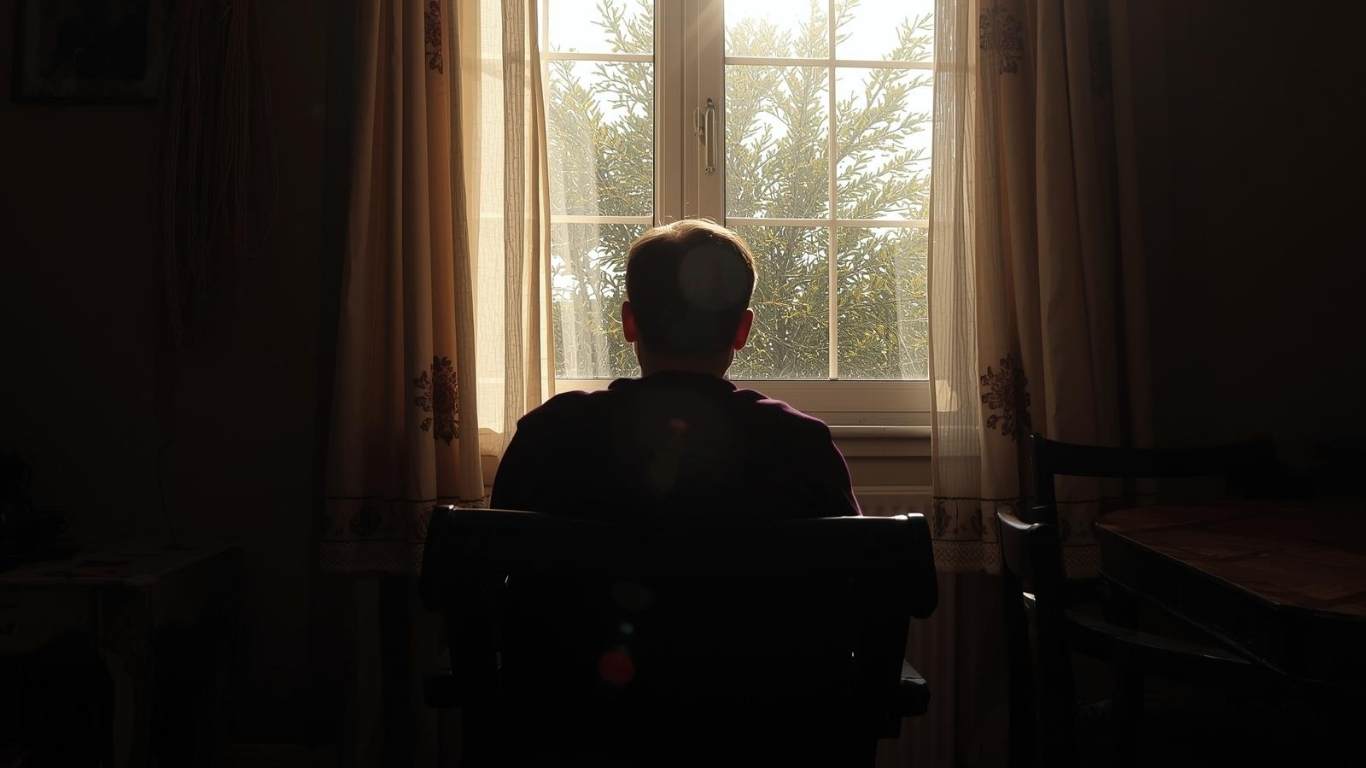
Reaching out for help when you have agoraphobia is not straightforward. The very condition that needs treating can make the conventional route, going to a GP, attending a clinic, sitting in a waiting room, feel completely impossible.
But help is available online.
And crucially, you don’t have to leave your home to access it.
This guide walks you through every step: how to recognise when it’s time to seek support, where to start, what to expect, and which options are available to you whether you’re mildly symptomatic or completely homebound.
Step 1: Recognise That What You’re Experiencing Has a Name
Many people live with agoraphobia for years, sometimes decades, without knowing what it is.
They attribute their avoidance to personal preference, introversion, or “just being anxious.” They don’t realise that what they’re experiencing is a recognised, diagnosable, and highly treatable condition.
GoodTherapy notes a striking statistic: without treatment, only 10% of people with agoraphobia fully recover. With treatment, most individuals can overcome the condition. The longer it goes unaddressed, the more entrenched the avoidance patterns become — making early recognition genuinely important.
Signs that what you’re experiencing may be agoraphobia rather than general anxiety:
-
You are avoiding specific places or situations where you previously had a panic attack or intense anxiety
-
Your list of avoided situations is growing over time
-
You feel you need a companion to go anywhere outside your home
-
You feel relief when you cancel plans rather than disappointment
-
Your home has become the only place that feels truly safe
-
You have stopped doing things you used to enjoy because of fear, not lack of interest
If several of these resonate, the next step is finding support — on your terms, at your pace.
Step 2: Start Remotely — You Don’t Have to Leave Home First
One of the most important things to know about getting help for agoraphobia in 2026 is this: you do not have to leave your home to begin treatment. This has always been true in principle, but the options available today make it more practical than ever.
The Mayo Clinic explicitly acknowledges the homebound challenge: “Therapists who treat agoraphobia are aware of this problem. If you feel homebound due to agoraphobia, look for a therapist who can help you find alternatives to office appointments.”
Remote and home-based options now include:
-
Soul & Body Frequency Change sessions (Nesteal) — fully remote, delivered via video from your home, working at the nervous system level to begin dissolving fear patterns before exposure work begins
-
Teletherapy — CBT and other evidence-based therapy delivered via video call
-
Online psychiatry — medication consultation and management without attending a clinic
-
App-based CBT programmes — structured self-help between or instead of therapist sessions
-
Online support groups — connecting with others who understand agoraphobia, without requiring in-person attendance
Homebound Healing confirms that tele-health services have opened genuinely new possibilities for people with agoraphobia — providing therapeutic support while fully respecting current comfort levels and not requiring travel.
Starting remotely is not a compromise.
For many people with agoraphobia, it is the right and clinically appropriate starting point.
Step 3: Book a First Session With Nesteal
For many people, the lowest-barrier and most impactful first step is TM+IN Frequency Change session, specifically because it requires nothing from you except being present in your own space.
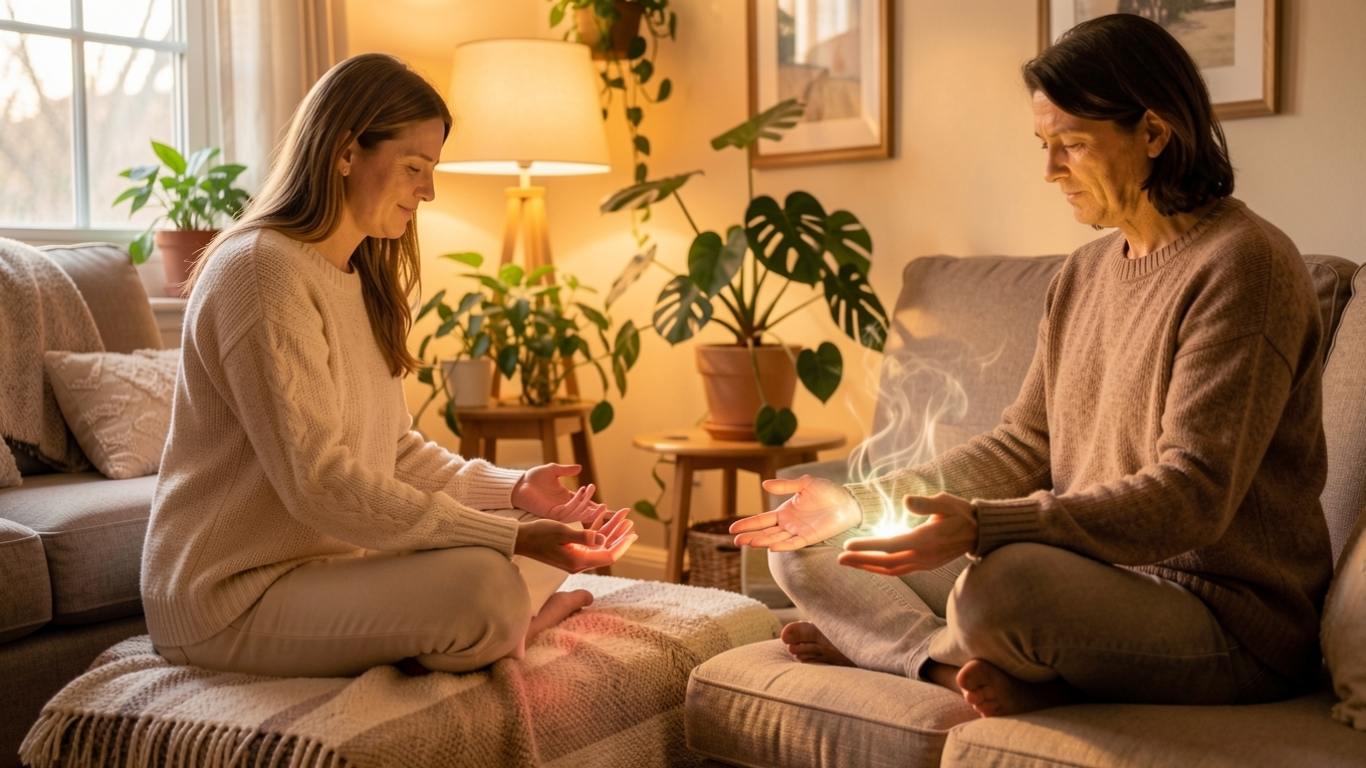
Nesteal’s remote sessions work at the nervous system and energetic level, gently recalibrating the overactive threat response that keeps agoraphobia in place. Unlike exposure therapy — which asks you to face feared situations — a Nesteal session begins by helping your nervous system find safety first, reducing the baseline fear that makes everything else feel impossible.
What a first session looks like:
-
You join a remote video session from wherever you feel most comfortable — your living room, bedroom, or any space that feels safe
-
No travel, no waiting rooms, no pressure to perform or explain yourself
-
The session works with your body’s frequency patterns to calm the overactive threat response and begin reducing the fear associated with open spaces, crowds, or being alone
-
Most clients report a noticeable shift in physical tension and emotional heaviness within the first session
Step 4: Speak to Your GP or Primary Care Doctor
Even if you begin with a remote complementary session, speaking to a GP or primary care doctor is an important parallel step — particularly if your symptoms are moderate to severe.
Your doctor can:
-
Provide a formal assessment and diagnosis
-
Rule out any physical conditions that may be contributing to your symptoms
-
Refer you to a mental health specialist or CBT therapist
-
Discuss whether medication may be appropriate for your situation
-
Monitor your progress over time
The NHS recommends a stepped care approach to agoraphobia — beginning with the least intensive effective intervention and stepping up as needed. This means your GP is the gateway to accessing funded or subsidised professional care in many healthcare systems.
If attending a GP appointment in person feels impossible, most practices now offer telephone or video consultations — ask specifically for this option when booking.
Step 5: Access Structured Psychological Therapy
Once you have spoken to a GP or have begun working remotely, the next step is accessing structured psychological therapy — most commonly CBT with an exposure component.
According to Ireland’s HSE, treatment for agoraphobia and panic disorder should be done in stages, beginning with self-help programmes, then moving to guided CBT, and stepping up to more intensive support where needed.
Ways to access CBT for agoraphobia:
-
GP referral to a therapist or psychological wellbeing practitioner
-
Private teletherapy platforms — video-based CBT with licensed therapists (BetterHelp, NOCD, or similar)
-
NHS Talking Therapies (UK) — free CBT available online or by phone, with no requirement to attend in person
-
iCBT (internet-delivered CBT) — structured online programmes with therapist support, shown to produce meaningful results in as little as one intensive week
-
App-guided exposure therapy — a 2025 PubMed study found that while face-to-face CBT produced stronger outcomes, smartphone-based CBT apps showed significant reductions in panic and agoraphobic symptoms and high adherence rates
The Horsham Clinic emphasises that CBT with a qualified therapist specifically helps challenge and change the thought patterns and behaviours underlying fear — and that this structured approach is more effective than self-help alone.
Step 6: Consider Medication If Symptoms Are Severe
If your agoraphobia is significantly impairing your ability to function — particularly if it is preventing you from engaging with therapy at all — medication may be appropriate as a bridge to make psychological treatment more accessible.
The NHS recommends SSRIs (selective serotonin reuptake inhibitors) as the first-line medication option for agoraphobia. They typically take 4–6 weeks to reach full effect and are most effective when combined with CBT.
Medication does not need to be a permanent decision — many people use it as a temporary support to reduce the intensity of symptoms enough to engage more fully with therapy and complementary approaches, then gradually reduce under medical supervision.
Step 7: Build a Support System
Recovery from agoraphobia is rarely a solitary process. Building a support system — even a small one — significantly improves outcomes and reduces the isolation that deepens the condition.
Sources of support to consider:
Support groups
HelpGuide recommends seeking out agoraphobia support groups — noting that hearing how others cope can inspire you, boost your confidence, and reduce the shame and isolation that often accompany the condition. Online support groups are particularly accessible for those who are homebound.
NAMI (National Alliance on Mental Illness)
The NAMI helpline — reachable at 800-950-6264 or by texting “NAMI” to 62640 — offers free information, support, and referral for anyone experiencing a mental health condition including agoraphobia. The 988 Suicide and Crisis Lifeline is also available 24/7 by call or text for urgent support.
Trusted friends or family members
Identifying one or two people who understand what you’re experiencing — and who can accompany you during early exposure steps without enabling avoidance — can be enormously helpful.
Online communities
Forums and communities specifically for people with agoraphobia — such as those curated at AgoraphobiaTest.com — provide peer support, shared experiences, and recovery resources in a fully remote format.
Step 8: Track Your Progress
Progress with agoraphobia is rarely linear — there will be good days and harder days. Tracking your progress helps you recognise genuine improvement that might not feel obvious day-to-day, and helps your treatment team adjust your care.
Simple ways to track progress include:
-
Rating your anxiety level (0–10) before and after each session or exposure step
-
Noting new situations you’ve re-entered, however small
-
Recording how long you spent outside your safe zone each week
-
Journalling how your physical symptoms have changed over time
-
Using a standardised scale like the Mobility Inventory for Agoraphobia (MIA) with your therapist
MentalHealth.com emphasises that recovery milestones, even small ones like walking to the end of your street, or sitting in a café for five minutes, are genuine victories worth recognising.
Progress in agoraphobia recovery is cumulative and builds on itself.
What If I’ve Already Tried Getting Help and It Didn’t Work?
This is one of the most common situations people with agoraphobia find themselves in — having tried therapy, perhaps tried medication, and still feeling stuck.
If this is your experience, it is important to understand that partial progress is not failure — it is information. It points to the layers of the condition that haven’t yet been fully addressed.
Common reasons people plateau with conventional treatment:
-
CBT addressed cognitive patterns but not nervous system dysregulation
-
Medication reduced intensity but didn’t resolve the underlying fear
-
Exposure therapy felt too overwhelming without sufficient nervous system support first
-
Treatment didn’t address the energetic and somatic patterns maintaining the avoidance
This is precisely where an approach like Soul & Body Frequency Change can make a meaningful difference — not as a replacement for what has already been tried, but as the missing layer that helps the other pieces finally click into place.
→ Explore Remote Energy Healing for Agoraphobia
→ Agoraphobia Relief in One Session — Is It Possible?
A Note on Urgency
If your agoraphobia is accompanied by thoughts of self-harm, severe depression, or a sense that things are deteriorating rapidly, please reach out to crisis support immediately:
-
988 Suicide and Crisis Lifeline (US): Call or text 988 (24/7)
-
NAMI Helpline: 800-950-6264
-
Crisis Text Line: Text HOME to 741741
-
NHS 111 (UK): Call 111 for urgent non-emergency mental health support
Agoraphobia can feel hopeless, particularly in its most severe forms. It is not. It is a well-understood condition with a strong evidence base for treatment — and people recover from it every day, including those who have been completely homebound for years.
Frequently Asked Questions
Can I get help for agoraphobia without leaving my home?
Yes. Remote therapy, telepsychiatry, app-based CBT, and Soul & Body Frequency Change sessions at Nesteal are all designed to be delivered entirely from your home. You can begin treatment today without stepping outside your front door.
What is the first step in getting help for agoraphobia?
The most important first step is simply deciding to seek support. From there, a remote first session — whether with Nesteal, a teletherapist, or your GP via phone — is a practical and low-barrier starting point.
How long before I notice improvement?
This varies. Some people notice meaningful shifts within their first few sessions; others progress more gradually. Research consistently shows that early treatment leads to faster and more complete recovery.
Do I need a formal diagnosis before starting treatment?
Not necessarily for all treatment options. Soul & Body Frequency Change sessions, teletherapy, and many online programmes are accessible without a formal prior diagnosis. However, a formal assessment from your GP or a mental health professional is valuable and opens up additional support pathways.
Is it possible to fully recover from agoraphobia?
Yes. With appropriate treatment, most people with agoraphobia achieve significant or full recovery. GoodTherapy confirms that with treatment, the majority of people can overcome the condition — including those with severe, long-standing agoraphobia.
Next Steps
→ Book a Soul & Body Frequency Change Session
→ Agoraphobia Treatment Options
→ Agoraphobia Help From Home
→ Remote Energy Healing for Agoraphobia
→ What Is Agoraphobia?
This article is for informational purposes only and does not constitute medical advice. Nesteal’s Soul & Body Frequency Change services are complementary wellness services and are not a substitute for professional medical care, psychiatric treatment, or licensed psychotherapy. Always consult your healthcare provider before beginning any new wellness programme. Results vary by individual.