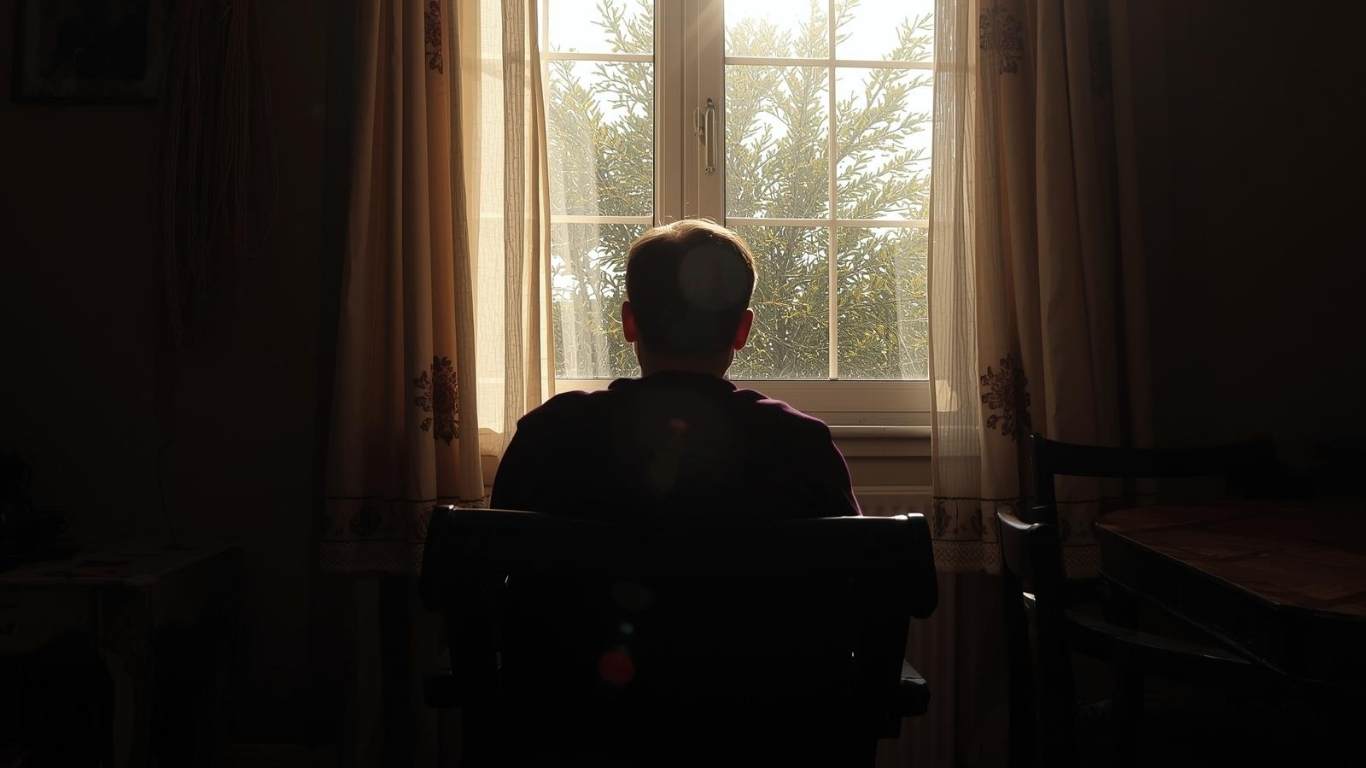
Cognitive behavioural therapy and SSRIs are the established first-line treatments for agoraphobia, and for many people, they work well but take a very long time.
But a significant number of people either don’t respond fully to conventional treatment, find the side effects of medication unacceptable, cannot access traditional therapy due to the nature of their condition, or simply want to explore every option available to them.
Alternative therapy for agoraphobia have never been better researched or more widely available.
This article covers every credible option, from cutting-edge neuroscience-based approaches to energy-based modalities, with the evidence behind each.
Let’s get started.
What Counts as “Alternative Therapy” for Agoraphobia?
For the purposes of this article, alternative therapies are defined as approaches that fall outside the conventional first-line treatment pathway of CBT and SSRIs. This includes:
-
Approaches that are evidence-based but less commonly prescribed as first-line treatments
-
Complementary approaches designed to work alongside conventional therapy
-
Emerging and innovative modalities with growing research support
-
Energy-based and holistic approaches that address dimensions of agoraphobia conventional medicine doesn’t reach
A comprehensive narrative review published in PMC (NIH) identified a broad range of alternative therapies for anxiety disorders — including physical activity, mindfulness, virtual reality, biofeedback, herbal remedies, TMS, cryotherapy, vagus nerve stimulation, MDMA, EMDR, and hyperbaric therapy — and found evidence supporting multiple approaches, particularly when used alongside or in place of pharmacotherapy for non-responders.
Alternative 1: Soul & Body Frequency Change (Nesteal)
Evidence base: Growing research on distant biofield healing, nervous system frequency regulation, and energy-based modalities
Delivery: 100% remote
Best for: Homebound individuals; those whose progress has plateaued; those seeking a non-pharmaceutical nervous system reset
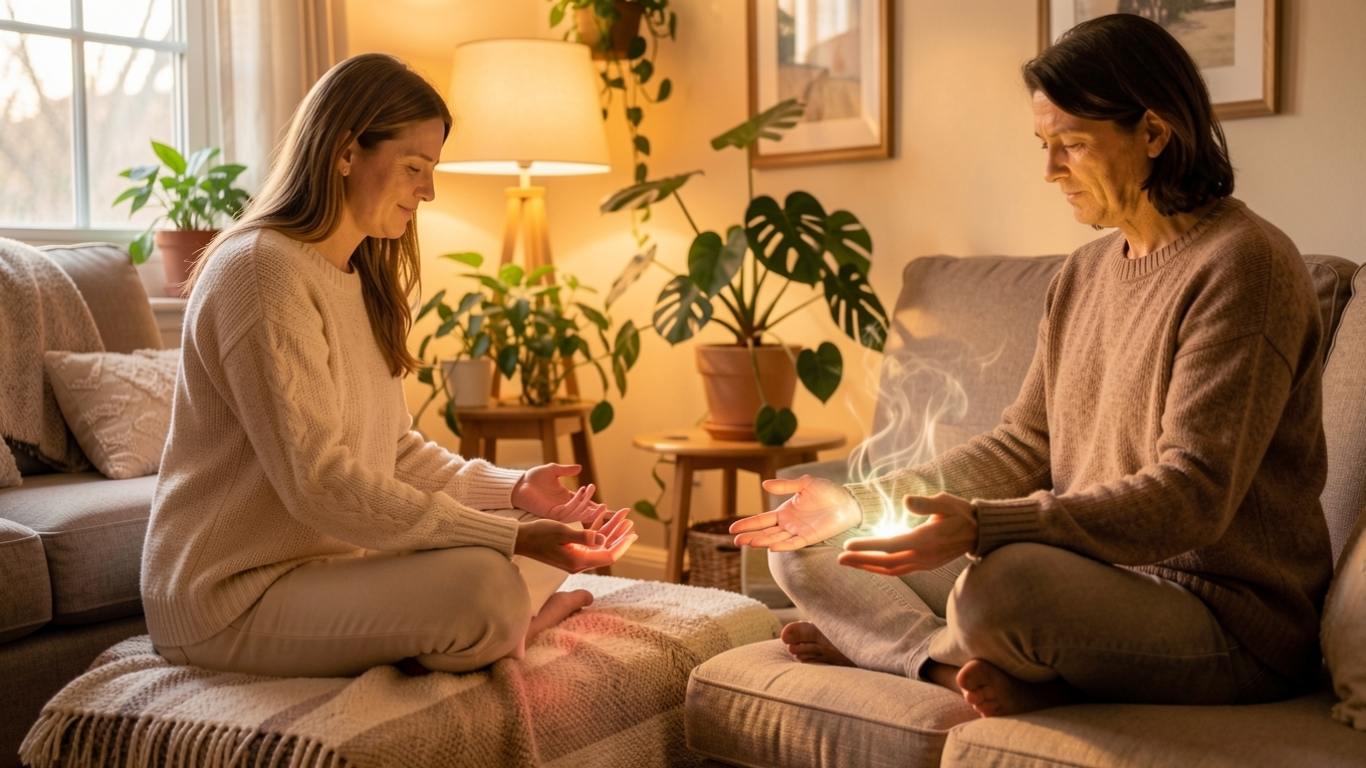
Soul & Body Frequency Change works at the energetic and physiological root of agoraphobia — addressing the frequency patterns held in the body’s energy field and nervous system that keep fear responses active long after the original trigger has passed. Unlike approaches that work cognitively or chemically, this modality recalibrates the autonomic nervous system’s threat-detection patterns directly, releasing the somatic fear imprints and energetic blocks beneath the avoidance.
What makes it genuinely alternative is its mechanism: it doesn’t ask you to talk through your fears, face situations, or tolerate medication side effects. It works at a level that precedes all of these — and does so entirely remotely, from the safety of your own home.
Research on distant biofield energy healing published in PMC (NIH) found significant improvements in anxiety, depression, stress, emotional trauma, sleep, and cognitive function compared to control groups — without adverse effects. A comprehensive overview of distant healing intention therapies published in PMC found evidence that focused intention affects human body and behaviour from a distance across hundreds of controlled experiments.
For those who have exhausted conventional options or want to address the layers conventional therapy doesn’t reach, Soul & Body Frequency Change represents a genuinely different entry point into recovery.
Alternative 2: EMDR (Eye Movement Desensitisation and Reprocessing)
Evidence base: Multiple RCTs; EMDRIA-recognised for anxiety disorders
Delivery: In-person or remote via video
Best for: Agoraphobia with traumatic roots; panic disorder with agoraphobia; treatment-resistant presentations
EMDR is a structured therapy that uses bilateral stimulation — typically guided eye movements — to help the brain reprocess distressing memories and experiences that underlie anxiety and avoidance. It was originally developed for PTSD but has since demonstrated effectiveness across a range of anxiety disorders including panic disorder with agoraphobia.
A randomised controlled trial comparing EMDR to waiting list and attention-placebo controls found that EMDR was significantly superior to waiting list on all measures — including questionnaire and diary measures of anxiety, panic disorder, and agoraphobia severity.
The EMDR International Association cites four RCTs demonstrating EMDR’s positive effect on panic and phobic symptoms, with preliminary data suggesting it may be effective not only for panic disorder but also for specific phobias and agoraphobia.
A particularly compelling case study published by EMDRIA describes a working professional with panic disorder and agoraphobia whose panic attacks fully remitted after 17 sessions of EMDR targeting early childhood traumas — with treatment gains maintained at 5-year follow-up. The study highlights a critical insight: for many people with agoraphobia, the roots lie in earlier traumatic experiences that standard CBT doesn’t address directly.
What EMDR addresses specifically in agoraphobia:
-
Traumatic memories underlying the fear response
-
The sensory imprints of past panic attacks
-
Childhood experiences that created the neurological template for threat hyperactivity
-
Core beliefs of helplessness and lack of safety that sustain avoidance
EMDR can be delivered via video call — making it accessible for those who cannot attend in person.
Alternative 3: Virtual Reality Exposure Therapy (VRET)
Evidence base: Multiple RCTs; growing clinical implementation
Delivery: Requires VR headset; increasingly available via clinics and home setups
Best for: Those who find real-world exposure too overwhelming to begin; gradual exposure in a controlled environment
Virtual Reality Exposure Therapy allows people with agoraphobia to practise confronting feared environments — crowded spaces, public transport, open plazas, faulty elevators — within a fully immersive, completely controlled virtual setting. The feared environment is real enough to activate the anxiety response, but the person remains physically safe throughout.
A 2025 randomised clinical trial published in JMIR Mental Health comparing VR-CBT to traditional CBT for agoraphobia found that both groups showed significant reductions in agoraphobia severity, anxiety, depression, and functional impairment — with no significant differences between groups at post-treatment or one-year follow-up. This confirms VRET as a clinically equivalent alternative to traditional in-vivo exposure for agoraphobia.
A comprehensive review published in PMC (NIH) noted that therapies combining paroxetine with CBT and VR exposure proved more effective in treating agoraphobia than paroxetine alone — and that following 10 weeks of VRET therapy, significant reductions in anxiety and avoidance were observed, with improvement in general wellbeing.
Research in the Wiley Online Library found that XR-based (extended reality) exposure therapy significantly outperformed standard imaginal exposure across phobic anxiety measures — providing stronger results than simply imagining feared situations.
Key advantage for agoraphobia:
VRET allows exposure practice to begin long before physical entry into feared situations — making it a particularly valuable bridge for people who are homebound or whose anxiety is too high to begin real-world exposure directly.
Alternative 4: Panic-Focused Psychodynamic Psychotherapy (PFPP-XR)
Evidence base: RCTs showing efficacy for panic disorder and agoraphobia
Delivery: In-person or remote
Best for: Those for whom CBT has not fully worked; people with deeper psychological roots to their agoraphobia
PFPP-XR is a psychodynamic approach specifically adapted for panic disorder and agoraphobia. Rather than focusing on cognitive restructuring and exposure, it explores the unconscious emotional conflicts and relational patterns — often rooted in early attachment experiences — that underlie the panic and avoidance.
PsychCentral identifies PFPP-XR as a recommended alternative when exposure-based therapy has not been effective, citing research demonstrating its efficacy specifically for anxiety disorders including panic disorder with agoraphobia.
What it addresses differently from CBT:
Where CBT works on conscious thoughts and avoidance patterns, PFPP-XR works on the deeper emotional and relational material that gives those patterns their energy — separation anxiety, dependency conflicts, unexpressed anger or grief, and the unconscious meaning attributed to panic symptoms.
Alternative 5: Transcranial Magnetic Stimulation (TMS)
Evidence base: Emerging research; established for depression, growing evidence for anxiety
Delivery: Clinic-based (non-invasive)
Best for: Treatment-resistant agoraphobia; those who cannot tolerate medication; seeking neurostimulation approaches
TMS is a non-invasive brain stimulation technique that uses magnetic pulses to modulate activity in specific brain regions involved in anxiety regulation — particularly the prefrontal cortex. It is FDA-cleared for depression and OCD, with a growing evidence base for anxiety disorders.
A narrative review published in PMC (NIH) identified TMS as one of the most promising alternative therapies for anxiety disorders, particularly repetitive TMS (rTMS) targeting the right dorsolateral prefrontal cortex — shown to produce anxiety reduction through modulation of the fear circuit.
While TMS requires clinic attendance (limiting accessibility for severely homebound individuals), it represents a meaningful option for people who have not responded adequately to medication and want a non-pharmaceutical neurobiological intervention.
Alternative 6: Vagus Nerve Stimulation (VNS)
Evidence base: Established for epilepsy and depression; emerging for anxiety
Delivery: Implanted device or non-invasive transcutaneous stimulation
Best for: Severe, treatment-resistant anxiety with agoraphobia; those interested in direct nervous system regulation
The vagus nerve is the primary conduit of the parasympathetic nervous system — the “rest and digest” counterpart to the fight-or-flight response that drives agoraphobia. VNS directly stimulates this nerve, activating the parasympathetic response and reducing anxiety and physiological hyperarousal.
A narrative review in PMC (NIH) found positive results for VNS in reducing anxiety symptoms, including through non-invasive transcutaneous approaches that don’t require surgical implantation.
Non-invasive VNS options — including transcutaneous auricular VNS (taVNS) delivered via the ear — are increasingly available and represent a promising adjunct to other agoraphobia treatments, particularly for those focused on nervous system regulation.
Alternative 7: Biofeedback and Neurofeedback
Evidence base: Multiple studies; established for anxiety and nervous system regulation
Delivery: Clinic-based or home devices available
Best for: Those who want objective, measurable nervous system regulation training
Biofeedback uses real-time physiological data — heart rate variability, skin conductance, breathing patterns — to help people learn to consciously regulate their nervous system responses. By providing immediate feedback on physiological state, it trains the body to shift from fight-or-flight toward calm on demand.
A PMC study found that neurofeedback therapy used as an adjunct to CBT was effective in removing agoraphobia symptoms — with alpha and beta training protocols enhancing connectivity between the prefrontal cortex and amygdala. These are precisely the brain structures involved in fear regulation and agoraphobic avoidance.
Home-based HRV biofeedback devices (such as the HeartMath Inner Balance or Muse headband) provide accessible entry points into biofeedback practice without clinic attendance.
Alternative 8: Hypnotherapy
Evidence base: Moderate; case studies and some controlled research
Delivery: In-person or remote
Best for: Those with high hypnotic suggestibility; adjunct to exposure therapy; phobia-focused work
Hypnotherapy uses guided relaxation and focused attention to access deeper layers of the mind, creating a receptive state in which anxiety patterns, fear associations, and avoidance behaviours can be directly addressed and reframed.
A review cited in PMC (NIH) found that hypnotherapy combined with CBT produced better outcomes than CBT alone for anxiety and phobia treatment — suggesting it works well as an adjunct rather than a standalone approach.
For agoraphobia specifically, clinical hypnotherapy is used to:
-
Reduce the conditioned fear response associated with specific locations or situations
-
Reframe catastrophic beliefs about panic symptoms
-
Develop resource states of calm and safety accessible in feared situations
-
Desensitise the nervous system to anticipated anxiety through imagery rehearsal
Hypnotherapy can be delivered remotely via video, making it accessible for homebound individuals.
Alternative 9: Emotional Freedom Techniques (EFT / Tapping)
Evidence base: 2025 systematic review confirms efficacy for anxiety disorders
Delivery: Self-directed or practitioner-guided; fully remote
Best for: Self-directed home practice; adjunct to therapy; high anxiety sensitivity
EFT combines focused attention on a feared situation with tapping on specific acupressure meridian points — creating a simultaneous activation and regulation of the fear response. The tapping appears to send a calming signal to the amygdala while the feared situation is held in mind, gradually reducing the emotional charge of previously distressing memories and situations.
A 2025 systematic review published in PMC (NIH) found evidence of efficacy for EFT in anxiety disorders compared with conventional therapies, with particular promise for conditions involving persistent fear and avoidance.
EFT is one of the few alternative therapies that can be fully self-directed — learned from books, apps, or videos and practiced independently at home — making it exceptionally accessible for homebound individuals.
Alternative 10: Herbal and Nutraceutical Approaches
Evidence base: Moderate; several herbs with research support for anxiety
Delivery: Self-directed; always discuss with GP before use
Best for: Mild symptoms; adjunct to other approaches; those preferring natural interventions
Several herbal and nutraceutical approaches have research support for anxiety reduction. PMC identified the following as having evidence in anxiety disorder treatment:
-
Kava (Piper methysticum) — one of the most researched herbal anxiolytics; shown to reduce anxiety significantly in multiple RCTs
-
Passionflower — shown in some studies to be comparable to benzodiazepines for generalised anxiety with fewer side effects
-
Ashwagandha (Withania somnifera) — demonstrates consistent stress and anxiety reduction in multiple controlled trials
-
Valerian root — primarily used for sleep but has anxiolytic properties relevant to the hyperarousal of agoraphobia
-
L-theanine — promotes relaxation without sedation; useful for reducing baseline anxiety
Always consult with your GP before beginning herbal supplements — some interact with medications including SSRIs.
Choosing the Right Alternative for You
The right alternative therapy depends on the specific layer of your agoraphobia that isn’t being fully addressed by your current treatment:
| If You Need… | Consider… |
|---|---|
| Nervous system reset without leaving home | Soul & Body Frequency Change (Nesteal) |
| Trauma processing beneath the panic | EMDR or PFPP-XR |
| Safe exposure practice before real-world steps | Virtual Reality Exposure Therapy |
| Brain-level anxiety regulation | TMS or Neurofeedback |
| Direct parasympathetic activation | Vagus Nerve Stimulation or HRV Biofeedback |
| Home-based self-directed practice | EFT / Tapping |
| Deeper unconscious pattern work | Hypnotherapy |
| Natural anxiety support | Herbal / Nutraceutical approaches |
For most people, the most effective approach is layering — combining a nervous system-level intervention like Soul & Body Frequency Change with a trauma-processing approach like EMDR and structured CBT. Each addresses a different dimension of the condition, and together they produce significantly more complete outcomes than any single modality alone.
Frequently Asked Questions
Are alternative therapies for agoraphobia scientifically supported?
Yes — to varying degrees. EMDR, VR exposure therapy, biofeedback, EFT, and mind-body approaches all have peer-reviewed research supporting their effectiveness for anxiety and agoraphobia. Soul & Body Frequency Change draws on a growing research base in biofield healing, nervous system frequency regulation, and distant intentionality.
Can alternative therapies replace CBT and medication?
For some people with mild to moderate agoraphobia, alternative approaches may be sufficient as standalone treatment. For most, they work best alongside conventional approaches — filling the gaps that CBT and medication leave.
Which alternative therapy works fastest for agoraphobia?
Soul & Body Frequency Change and EFT both tend to produce relatively rapid initial shifts — often within the first session — because they work at the nervous system level rather than through the slower process of cognitive restructuring.
Can alternative therapies be delivered remotely?
Many can. Soul & Body Frequency Change, EMDR, hypnotherapy, EFT, biofeedback (with home devices), and online psychodynamic therapy are all available remotely — making them fully accessible for homebound individuals.
What if I’ve tried CBT and medication and still struggle?
This is precisely the situation alternative therapies are most valuable for. Research confirms that integrating complementary approaches for non-responders to conventional treatment produces meaningful improvement where standard pathways have not. Start with the layer that feels most accessible — for most homebound people, a remote Soul & Body Frequency Change session is the lowest-barrier and most immediate first step.
Related: EMDR agoraphobia, VR therapy agoraphobia, hypnotherapy agoraphobia, TMS anxiety agoraphobia, complementary treatment agoraphobia, alternative agoraphobia treatment.
Next Steps
Recovery from agoraphobia doesn’t require finding the one perfect treatment. It requires finding the right combination of approaches for your specific situation — and being willing to try something new if what you’ve done so far hasn’t fully worked.
→ Book a Soul & Body Frequency Change Discovery Session
→ Remote Energy Healing for Agoraphobia
→ Holistic Treatment for Agoraphobia
→ Agoraphobia Treatment Options
→ Agoraphobia Help From Home