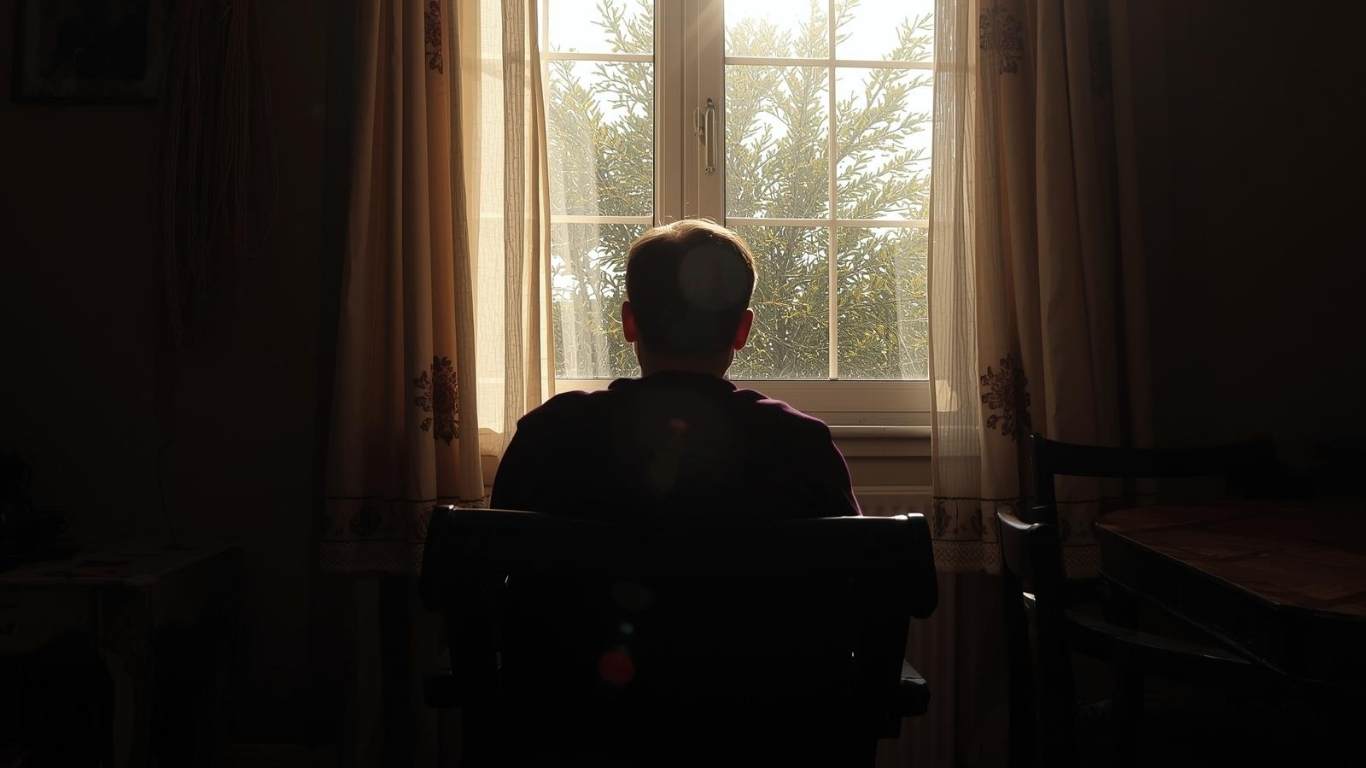
The most common question people with severe agoraphobia ask is also the one that feels most impossible: How to overcome Agoraphobia without leaving home – when getting help requires doing the exact thing I can’t do?
The answer is that recovery does not begin outside your front door. It begins inside — in your nervous system, your thought patterns, your daily practices, and the professional support you choose to access remotely. By the time you are ready to step outside, your nervous system will already have changed. The world outside won’t feel the same as it does today.
This guide gives you a complete, step-by-step framework for beginning and sustaining agoraphobia recovery from home — supported by current research and structured around what actually works.
Understanding What Recovery Actually Means
Before beginning, it helps to understand what you are working toward — because recovery from agoraphobia is not a single moment. It is a gradual neurological process.
NIH StatPearls confirms that agoraphobia, like all anxiety disorders, is maintained by avoidance, each time a feared situation is avoided, the brain’s threat assessment is reinforced. Recovery works in the opposite direction: each time a feared situation is approached and survived, the brain updates its threat assessment downward. Over time, these updates accumulate and the fear loses its power.
Clear Mind Treatment describes this as neuroplasticity —> the brain’s capacity to physically rewire itself in response to new experience. This is not metaphorical. Each step forward in recovery is a literal neurological change — new neural pathways forming, old fear associations weakening. The brain that has been shaped by agoraphobia can be reshaped by recovery, at any age, regardless of how long symptoms have been present.
Recovery requires three things working together:
-
Reducing the underlying nervous system activation that makes everything feel dangerous
-
Challenging the thought patterns that interpret neutral situations as threats
-
Gradually reintroducing avoided situations to update the brain’s threat assessments
All three can begin from home. None require leaving first.
Step 1: Begin Professional Remote Support This Week
The single most important first step is not a technique or an exercise — it is putting professional support in place. For homebound individuals, this means remote professional support specifically.
According to Living With Agoraphobia: Strategies to Cope and Heal, if leaving home feels impossible, starting therapy through virtual sessions is a good stepping stone — many therapists offer secure video or phone-based options. And the research confirms this works: videoconferencing CBT is clinically equivalent to in-person therapy for panic disorder and agoraphobia, with equivalent outcomes and therapeutic alliance strength.
Two remote first steps — begin both simultaneously:
1. Book a Soul & Body Frequency Change session at Nesteal
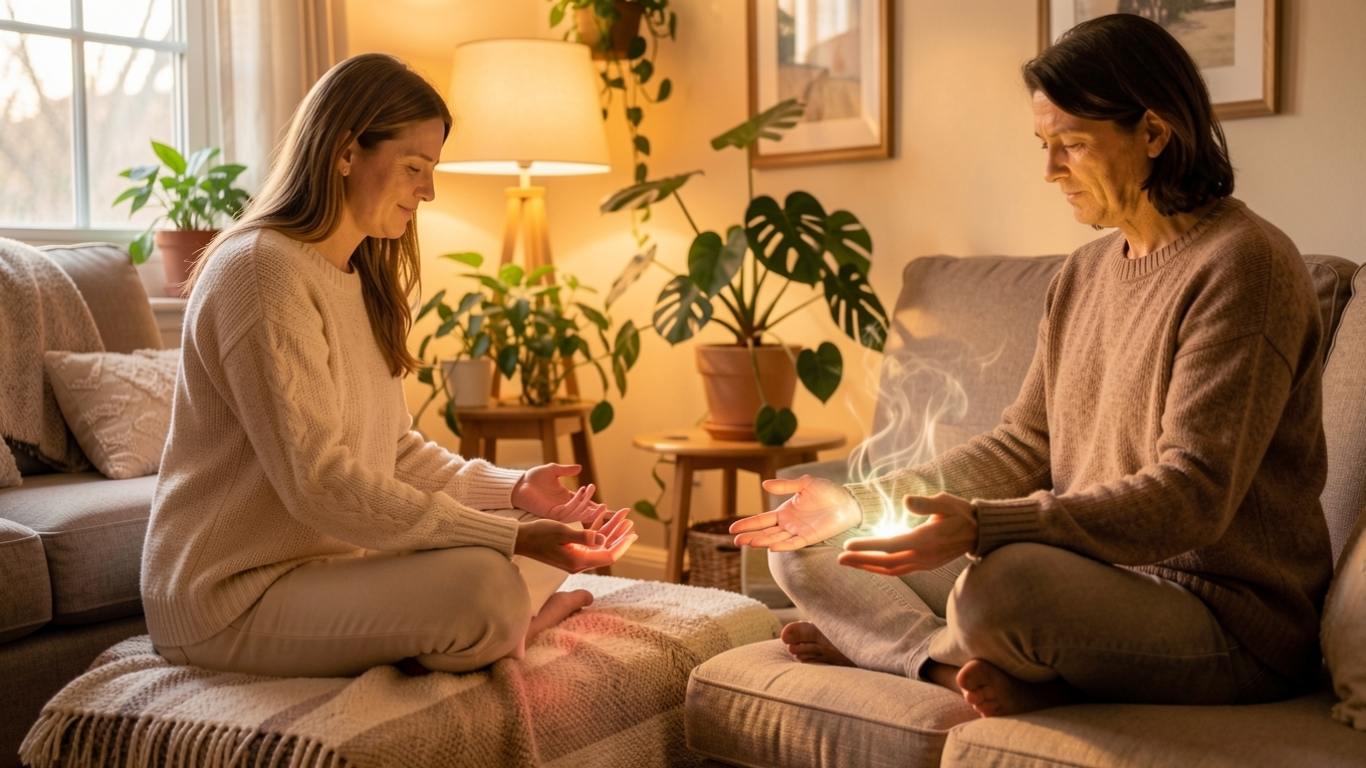
This addresses the nervous system and energetic layer of your agoraphobia — the deep physiological patterns that keep fight-or-flight activated and make avoidance feel necessary. Remote sessions delivered via video from your home begin reducing the baseline fear before any exposure work is required. Many clients report a noticeable shift in physical tension and emotional heaviness within the first session.
2. Connect with a teletherapist
CBT delivered via video call provides the cognitive and behavioural framework for recovery — psychoeducation, cognitive restructuring, and a personalised exposure hierarchy built at your pace. Platforms including BetterHelp, Online-Therapy.com, and NHS Talking Therapies (UK) offer video CBT with no in-person requirement.
These two approaches address different layers of the same condition. Together, they create a foundation for recovery that neither produces alone.
Soul & Body Frequency Change is a complementary wellness service and is not a replacement for medical care, psychiatric treatment, or licensed psychotherapy. Results vary by individual. Always consult your healthcare provider before beginning any new wellness programme.
Step 2: Stabilise Your Nervous System Daily
Before exposure work begins in earnest, your nervous system needs daily practices that shift it — even briefly — out of chronic fight-or-flight. Each time it visits a regulated state, it becomes slightly easier to return there. Over weeks, the baseline activation level drops.
These practices are not just relaxation — they are neurobiological interventions that change the physiological conditions in which fear is maintained.
Daily nervous system practices:
Morning — Diaphragmatic breathing (5 minutes)
Before checking your phone, before the day’s demands begin. Inhale through the nose for 4 counts, allowing the belly to rise. Exhale through the mouth for 6–8 counts. The extended exhale directly activates the vagal brake and signals safety to the nervous system.
Midday — Grounding practice (5 minutes)
5-4-3-2-1: name 5 things you can see, 4 you can feel, 3 you can hear, 2 you can smell, 1 you can taste. Redirects attention from internal threat monitoring to external present-moment reality.
Evening — Progressive muscle relaxation (10–15 minutes)
Systematically tense and release each muscle group from feet to face. Teaches the body the contrast between tension and release, and actively discharges the physical holding patterns anxiety creates.
Before sleep — Body scan meditation (10 minutes)
Lie down, close your eyes, and slowly scan each part of your body from toes to head — noticing sensation without judgment. Reduces cortisol and prepares the nervous system for restorative sleep.
These four practices, done consistently, begin changing the neurological conditions that sustain agoraphobia before any step outside your home is required.
Step 3: Educate Yourself About What’s Happening
Understanding your condition precisely reduces its power. Much of the distress of agoraphobia comes from not knowing what is happening — the symptoms feel random, uncontrollable, and catastrophic. Psychoeducation transforms this.
Key things to understand:
The anxiety cycle
Anxiety activates physical symptoms → physical symptoms are interpreted as dangerous → interpretation amplifies anxiety → amplified anxiety intensifies symptoms → avoidance provides temporary relief → avoidance reinforces the belief that the situation was dangerous → the avoided zone grows.
Why avoidance makes agoraphobia worse
Every time you avoid a feared situation, your brain records: “I escaped danger.” It does not record: “There was no danger.” Avoidance feels like relief but functions as reinforcement — making the next encounter with the same situation more frightening, not less.
The role of physical symptoms
Panic symptoms — racing heart, breathlessness, dizziness, nausea — are not dangerous. They are the physiological expression of the fight-or-flight response, evolved to help you escape predators. They cannot harm you. Understanding this intellectually is not the same as feeling it bodily — but it is a necessary foundation for the work to come.
Neuroplasticity
Your brain is not fixed. The fear associations that drive your agoraphobia were learned — through experience and repetition — and they can be unlearned through new experience and repetition. Every approach step is a neurological update. Recovery is literally physical change in the brain.
Step 4: Challenge the Thought Patterns Driving Avoidance
Alongside nervous system work, your thought patterns need direct attention. CBT’s cognitive restructuring — challenging the beliefs that interpret situations as dangerous — is the most researched approach for this layer of agoraphobia.
Core cognitive distortions in agoraphobia and how to challenge them:
Catastrophising — “If I panic, something terrible will happen.”
Challenge: What is the realistic worst case? What actually happened the last time you panicked? Panic is intensely uncomfortable but not dangerous. Has it ever actually harmed you physically?
Overestimating danger — “That place/situation is genuinely dangerous for me.”
Challenge: What is the actual statistical probability of the feared outcome? Is the danger real or a prediction? What evidence supports it? What evidence contradicts it?
Underestimating coping capacity — “I couldn’t handle it if something happened.”
Challenge: What have you handled in the past that you thought you couldn’t? What coping skills do you now have that you didn’t before? What would you actually do?
Mind reading and fortune telling — “Everyone will notice and judge me. I know I’ll panic.”
Challenge: How confident are you in this prediction? Have you been wrong before? What is an alternative, more realistic interpretation?
Emotional reasoning — “I feel terrified, therefore it must be dangerous.”
Challenge: Feelings are information — not facts. The presence of fear does not confirm the presence of danger. What else might explain the feeling?
MentalHealth.com confirms that CBT for agoraphobia uses exactly this process — helping people identify and shift the thought patterns that perpetuate avoidance and sustain fear. With a teletherapist guiding this work, it becomes systematically more effective.
Step 5: Build Your Home-Based Exposure Hierarchy
Exposure is the most powerful behavioural intervention for agoraphobia — and it can begin entirely within your home and immediate surroundings. The key is structure, gradualism, and consistency.
Research on self-directed exposure published in Cambridge University Press found that self-exposure therapy for panic disorder and agoraphobia produced significant, durable improvement in panic and agoraphobic avoidance — with gains maintained at one-year follow-up — demonstrating that structured self-exposure produces real neurological change.
How to build your hierarchy:
-
List every situation you currently avoid — from mildest to most anxiety-provoking
-
Rate each situation 0–10 based on the anxiety it currently produces
-
Add sub-steps between items — there should be no jump of more than 2 anxiety points
-
Begin at level 1–2 — situations that produce mild but noticeable anxiety
-
Stay in each situation until anxiety drops by at least 50% — this is the neurological update
-
Repeat each step multiple times before moving up
-
Never jump steps — gradual progression is what makes it work
A sample hierarchy for someone who is fully homebound:
| Level | Situation | Approx. Anxiety |
|---|---|---|
| 1 | Looking out a window at the street | 2/10 |
| 2 | Opening a window and listening to outside sounds | 3/10 |
| 3 | Standing at an open front door for 30 seconds | 4/10 |
| 4 | Stepping just outside the front door, staying near it | 5/10 |
| 5 | Walking to the end of the path alone | 5/10 |
| 6 | Walking to the end of the street with a support person | 6/10 |
| 7 | Walking to the end of the street alone | 7/10 |
| 8 | Entering a quiet local shop briefly | 7/10 |
| 9 | Using public transport one stop | 8/10 |
| 10 | Attending a busy public space independently | 9/10 |
Every step is a genuine recovery milestone. Living With Agoraphobia emphasises that overcoming agoraphobia requires time, effort, and self-compassion — and that celebrating every milestone, however small, is essential to sustaining momentum.
Step 6: Use Coping Tools During Exposure
When attempting exposure steps, anxiety will rise — that is the nature of the process. Having practised coping tools ready transforms manageable anxiety from something that stops the step into something that confirms it is working.
During exposure steps, use:
-
Slow breathing — 3-count inhale, 6-count exhale, throughout
-
Grounding — 5-4-3-2-1, or focusing on physical sensation of feet on the ground
-
Coping statements — “This is anxiety, not danger. I can tolerate this. It will pass.”
-
Stay, don’t flee — leaving the situation the moment anxiety peaks reinforces the fear; staying until anxiety reduces by half is the update
The APA highlights that intensive, structured CBT for panic disorder and agoraphobia — including both cognitive work and exposure practice — produces significant, rapid relief even when delivered in short, intensive formats. This is encouraging for homebound individuals: the work does not have to be slow.
Step 7: Track Progress and Recognise Gains
Because progress in agoraphobia recovery is gradual, it is easy to miss on a day-to-day basis. Systematic tracking makes invisible progress visible — which is essential for maintaining motivation.
Simple tracking methods:
-
Rate anxiety before and after each exposure step (0–10)
-
Note each new situation entered, however briefly
-
Record which previously avoided situations now feel less threatening
-
Keep a weekly log of how far from your home you ventured
-
Note physical changes — reduced tension, better sleep, lower baseline anxiety
Living With Agoraphobia emphasises that small victories matter — and that recognising them builds the confidence needed for the next step. Recovery from agoraphobia is cumulative. Every measured gain is evidence that the brain is changing.
Step 8: Manage Setbacks Without Losing Progress
Setbacks are a normal and expected part of agoraphobia recovery — not evidence that recovery isn’t happening.
A difficult day — when a previously manageable step feels impossible, or when anxiety spikes unexpectedly — does not erase the neurological changes already made. The neural pathways formed by previous approach steps do not disappear. They may be temporarily less accessible, but they remain.
How to manage setbacks:
-
Return to the last step you completed successfully — not to the beginning
-
Increase daily nervous system regulation practices
-
Reconnect with your therapist or practitioner
-
Use your coping tools more actively
-
Be deliberately compassionate toward yourself — shame and self-criticism amplify anxiety
Recovery Kansas City notes that learning to tolerate temporary setbacks without catastrophising them is itself a recovery skill — and one that gets easier with practice.
Step 9: Build Your Support System
Recovery from agoraphobia is rarely entirely solitary. A support system — however small — significantly improves outcomes.
Elements of a recovery support system:
-
Your Nesteal practitioner — remote nervous system and energetic support
-
Your teletherapist — CBT and personalised exposure guidance
-
One or two trusted people who understand your condition and support approach (not avoidance)
-
Online support groups — peer connection with others who understand agoraphobia
-
Your GP — for monitoring, medication if appropriate, and referrals
An important note on the role of support people: the most helpful companions during exposure steps are those who encourage you to stay in difficult situations rather than facilitating escape. Well-meaning reassurance that enables avoidance — “it’s okay, we can go home” — reinforces the fear rather than reducing it.
Step 10: Maintain Recovery Beyond Symptoms
Once symptoms have reduced significantly, the final step is building a life that continues to expand rather than contract — maintaining the neurological gains made during recovery and preventing relapse.
Long-term maintenance strategies:
-
Continue approach behaviour as a permanent orientation — always move toward, not away
-
Maintain daily nervous system regulation practices even when symptoms are low
-
Attend regular booster sessions with your practitioner or therapist
-
Return to your exposure hierarchy immediately at the first sign of avoidance returning
-
Use setbacks as information — each one reveals a layer still in progress
-
Build a meaningful life outside your previous safe zone — relationships, activities, goals — so that the world outside has something to draw you toward
MentalHealth.com confirms that recovery and remission are genuinely achievable with appropriate treatment — and that people with agoraphobia do return to full and active lives.
A Realistic Recovery Timeline
There is no single timeline for overcoming agoraphobia — but research and clinical experience provide a realistic framework:
| Phase | Timeframe | What’s Happening |
|---|---|---|
| Foundation | Weeks 1–2 | Remote professional support begins; daily regulation practices established |
| Stabilisation | Weeks 2–6 | Nervous system baseline decreasing; cognitive work beginning; anxiety less overwhelming |
| Early exposure | Weeks 4–12 | First steps in home-based hierarchy; doorway, path, street; regular small victories |
| Expansion | Months 3–6 | Gradually wider comfort zone; able to access local area with manageable anxiety |
| Consolidation | Months 6–12 | Significant recovery; previously avoided situations accessible; quality of life returning |
| Maintenance | Ongoing | Active life; approach orientation maintained; relapse prevention strategies in place |
Progress is not linear — it moves in waves, with good periods and harder ones. The trajectory over weeks and months, not the quality of any single day, is what matters.
Frequently Asked Questions
Can I really overcome agoraphobia without ever leaving home first?
The early stages of recovery — professional support, nervous system regulation, cognitive restructuring, and the beginning of a home-based exposure hierarchy — can all be completed without leaving home. Physical departure becomes part of the process as recovery progresses, but it is not where recovery begins.
How long does home-based recovery take?
Most people notice meaningful shifts within the first few weeks of consistent practice. Broader recovery — returning to previously avoided situations with manageable anxiety — typically takes 3–12 months depending on severity. Long-standing, severe agoraphobia may take longer, but recovery is achievable regardless of duration.
What if exposure feels too overwhelming to begin?
This is where Soul & Body Frequency Change sessions are most valuable — reducing the baseline nervous system activation that makes exposure feel impossible, before the exposure work formally begins. Start with the nervous system layer first; exposure becomes more manageable from there.
Is it better to recover alone or with support?
With support, consistently. Research confirms that therapist-guided exposure produces stronger outcomes than self-directed exposure alone. Remote professional support — both Soul & Body Frequency Change and teletherapy — is fully accessible from home and significantly improves recovery outcomes.
What if I’ve tried to recover before and failed?
Previous attempts are not failures — they are information about which layers of your agoraphobia haven’t yet been addressed. If CBT hasn’t fully worked, the nervous system and energetic layer may still be active. If medication helped but wasn’t enough, the cognitive and behavioural patterns still need addressing. The right combination, addressing all layers, produces results where individual approaches haven’t.
Next Steps
Recovery from agoraphobia begins exactly where you are — and it begins the moment you take the first step toward it.
→ Book a Session
→ Agoraphobia Help From Home
→ Remote Energy Healing for Agoraphobia
→ Natural Relief for Agoraphobia
→ Agoraphobia Treatment Options