If agoraphobia has made leaving your home feel impossible, the idea of attending therapy in a clinic, sitting in a waiting room, or navigating public transport to see a specialist can feel like a cruel joke.
The treatment requires doing the exact thing the condition makes impossible.
But here is what matters most: you do not have to leave home to begin recovering from agoraphobia.
Every approach for agoraphobia help from home, on this page, is available from wherever you are, some professionally delivered, some self-directed, all genuinely effective.
Recovery doesn’t begin when you step outside. It begins the moment you choose to start, from exactly where you are.
Professional Agoraphobia Help From Home:
TM+IN Frequency Change — Nesteal
The most direct and lowest-barrier professional support for homebound agoraphobia is a remote Frequency Change session at Nesteal — specifically designed for people who cannot or will not leave their home.
Nesteal’s approach works at the nervous system and energetic level, addressing the deep physiological patterns that keep agoraphobia in place: the chronic fight-or-flight activation, the somatic fear imprints from past panic attacks, and the energetic patterns that make the body register danger even when the mind understands there is none.
You join via a secure video link from your living room, bedroom, or any space that feels safe. There is no travel, no waiting room, no pressure to perform. The session begins where you are.
What makes it suited specifically to homebound agoraphobia:
-
100% remote — every session delivered virtually with no in-person requirement
-
Works before exposure — reduces the baseline fear that makes everything else feel impossible
-
No requirement to face feared situations during sessions
-
Noticeable shifts in physical tension and fear intensity reported from the first session
-
7-day satisfaction guarantee — full refund if no noticeable shift is experienced
Soul & Body Frequency Change is a complementary wellness service and is not a replacement for medical care, psychiatric treatment, or licensed psychotherapy. Results vary by individual. Always consult your healthcare provider before beginning any new wellness programme.
Online Therapy (Teletherapy)
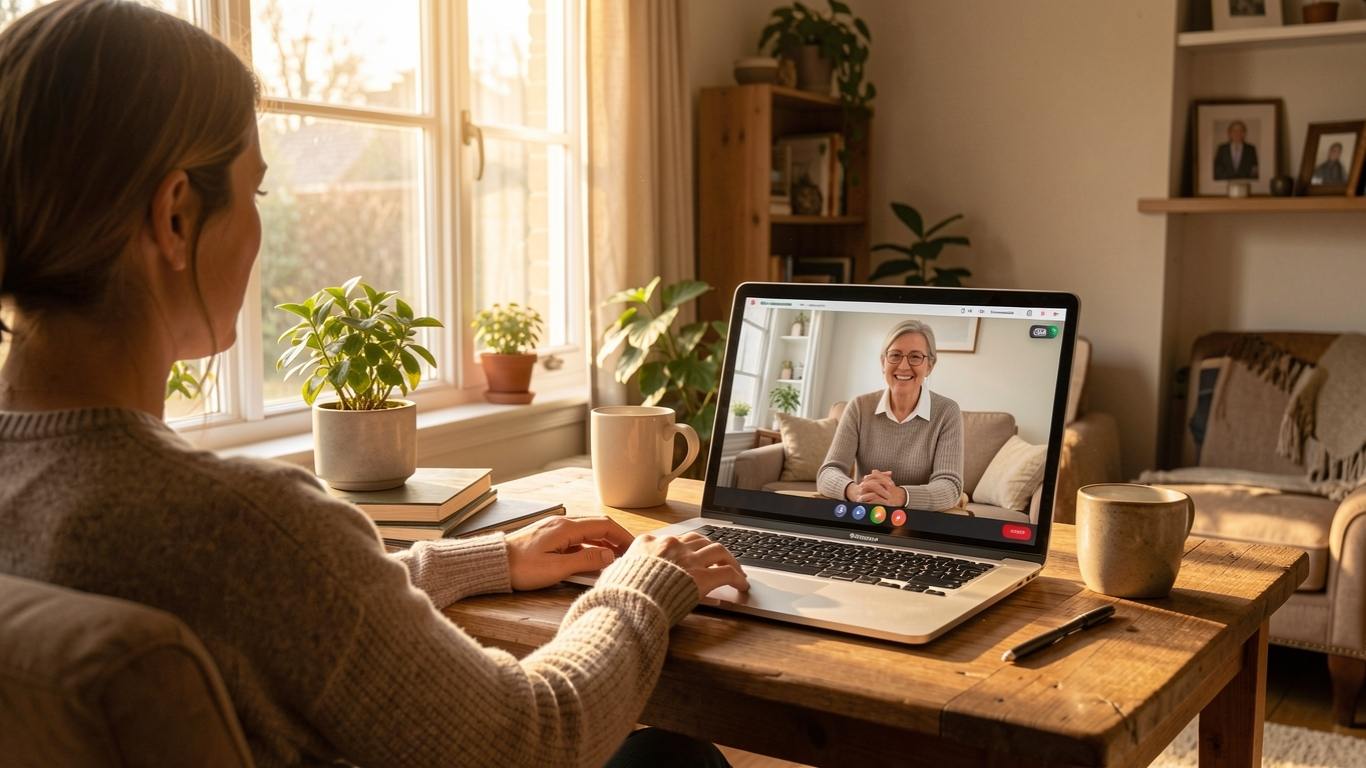
Live Nasteal or CBT delivered via video call is clinically equivalent to in-person therapy for agoraphobia, confirmed by multiple peer-reviewed trials. A qualified Nesteal or CBT therapist guides you through psychoeducation, cognitive restructuring, and graduated exposure — all from your home.
Homebound Healing confirms that telehealth services provide valuable therapeutic support while fully respecting your current comfort levels and not requiring any travel whatsoever. For homebound individuals specifically, telehealth represents a clinically appropriate and evidence-supported pathway to care.
The Mayo Clinic directly addresses this scenario: “If you feel homebound due to agoraphobia, look for a therapist who can help you find alternatives to office appointments… Some therapists also may offer some sessions by video, over the phone or through email.”
Platforms with strong CBT options including BetterHelp, Online-Therapy.com, and Brightside Health all offer fully remote video therapy — matchable within 24–72 hours.
Internet-Delivered CBT (iCBT)
Structured CBT programmes delivered via web or app — with therapist support provided by message or asynchronously — are a flexible and highly effective option for homebound agoraphobia.
A randomised controlled trial published in PMC (NIH) found that iCBT produced significantly greater reductions in panic and agoraphobia symptoms compared to care as usual over 12 weeks — entirely from home, at the user’s own pace.
Key benefits for homebound users:
-
Available 24/7 — no scheduling constraints
-
Self-paced — work through modules as energy and capacity allow
-
Therapist guidance without the pressure of real-time sessions
-
Evidence-based content grounded in exposure-based CBT
App-Guided Exposure Therapy
Mobile apps that guide exposure therapy can be used from home — including within feared situations when the time is right. A 2025 randomised controlled trial published in PMC (NIH) found that app-guided exposure therapy for panic disorder with agoraphobia produced significantly lower symptom severity, reduced safety maneuvers, and improved quality of life compared to a waiting list control.
Apps in this category allow you to practice grounding, breathing, and gradual self-exposure at your own pace — starting from the safety of your home.
Online Psychiatry (Medication Consultation)
If medication is appropriate for your level of symptoms, online psychiatry platforms allow you to consult with a qualified psychiatrist, receive a prescription, and manage your medication — entirely via video call. No clinic attendance required.
The NHS recommends SSRIs as the first-line medication option for agoraphobia, particularly for moderate to severe presentations. When combined with CBT and complementary nervous system work, medication can reduce the intensity of symptoms enough to engage more fully with recovery.
Online Support Groups
Connecting with others who understand agoraphobia reduces the isolation that deepens the condition — and online groups make this possible without requiring physical presence. HelpGuide recommends support groups as a valuable part of agoraphobia recovery, noting that hearing how others cope can inspire and boost confidence.
Options include:
-
NAMI Online Communities — peer-led support for anxiety disorders
-
Reddit communities (r/Agoraphobia, r/Anxiety) — active peer support forums
-
Agoraphobia-specific Facebook groups — moderated communities for shared experience
-
Therapist-led online group sessions — structured support with professional guidance
Self-Help Techniques to Practice at Home
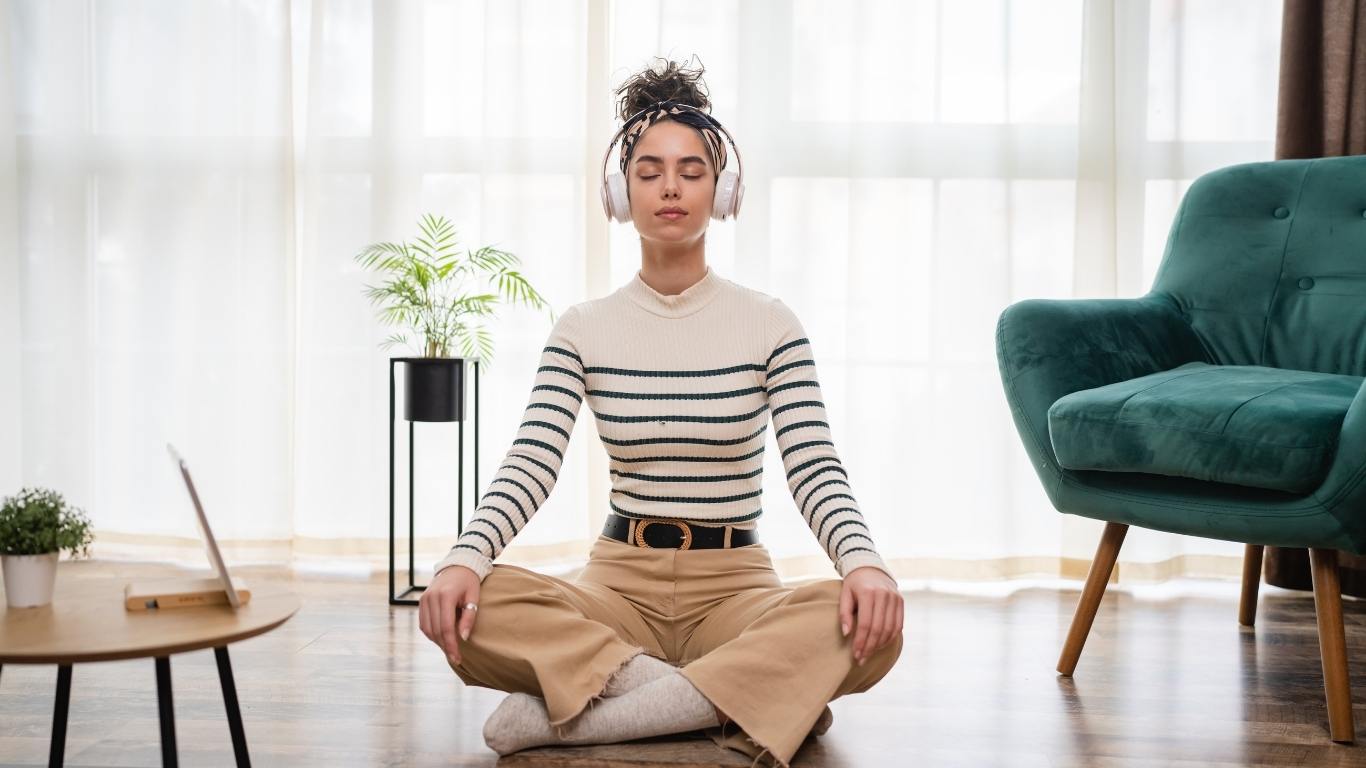
Professional support is the strongest foundation for recovery, but a significant amount of meaningful work can be done between sessions, at your own pace, from your own space.
Breathing Techniques
Breathing is the most direct physiological tool available for nervous system regulation. Because the breath connects the voluntary and autonomic nervous systems, conscious breathing can shift the body from fight-or-flight into rest-and-digest quickly and reliably.
Diaphragmatic breathing:
Place one hand on your chest and one on your abdomen. Inhale slowly through your nose, allowing your abdomen to rise. Exhale slowly through your mouth, feeling your abdomen fall. Focus on the abdomen, not the chest. Repeat for 3–5 minutes.
Box breathing:
Inhale for 4 counts → hold for 4 counts → exhale for 4 counts → hold for 4 counts. Visualise tracing the four sides of a square. Used in clinical and military settings for rapid nervous system regulation.
Extended exhale breathing:
Inhale for 3 counts → exhale for 6 counts. HelpGuide notes that lengthening the exhale is the core principle in breathing practices for agoraphobia — it activates the vagal brake and calms the nervous system.
Practise daily — not only during anxiety. The more often the nervous system visits a regulated state, the more easily it returns there under pressure.
Grounding Exercises
Grounding techniques anchor attention to the present moment — interrupting anticipatory anxiety and disconnecting from the mental spiral that escalates panic.
5-4-3-2-1 technique:
Name 5 things you can see → 4 you can feel → 3 you can hear → 2 you can smell → 1 you can taste. This sensory scan redirects focus from internal fear to external reality, grounding you in the present moment.
Cold water grounding:
Hold your wrists or hands under cold water for 30–60 seconds. The physical sensation activates the dive reflex, rapidly reducing heart rate and physiological arousal.
Physical anchoring:
Press your feet firmly into the floor, feeling the texture and weight. Press your back against a chair. These physical sensations signal “I am here, I am safe” to the nervous system.
Progressive Muscle Relaxation (PMR)
PMR involves systematically tensing then releasing each muscle group from toes to head — teaching the body the difference between tension and relaxation, and actively releasing the chronic physical holding patterns anxiety creates.
How to practice:
-
Lie or sit comfortably
-
Begin with your feet — tense the muscles for 5–7 seconds, then release completely for 20 seconds, noticing the sensation of relaxation
-
Move progressively through calves, thighs, abdomen, chest, hands, arms, shoulders, neck, and face
-
Allow yourself to notice the contrast between tension and release
Regular PMR practice has been shown to reduce both psychological anxiety and physical symptoms — particularly the muscular tension and chest tightness associated with agoraphobia and panic.
Self-Directed Graduated Exposure
Research published in ScienceDirect found that at six-month follow-up, self-directed exposure instructions produced outcomes comparable to therapist-assisted exposure — suggesting that structured self-exposure, done carefully and consistently, can produce significant therapeutic gains.
How to build a home-based exposure hierarchy:
-
List your avoided situations — from mildest anxiety (perhaps imagining a busy street) to most difficult (leaving the house alone)
-
Rank them 1–10 based on the anxiety they produce
-
Begin at level 1–2 — the situation that produces mild but manageable anxiety
-
Stay in the situation until your anxiety reduces by at least 50% — this is when the nervous system learns safety
-
Repeat the same step until it produces minimal anxiety before moving up
-
Never jump steps — gradual progression prevents overwhelm and reinforces success
Home-based exposure steps to begin with:
-
Standing near a front window and looking outside
-
Opening the front door and standing in the doorway
-
Standing just outside the front door for 30 seconds
-
Walking to the end of your path or driveway
-
Walking to the end of your street with a support person
-
Progressing to local shops, public transport, crowds — in time, at your pace
The key principle: approach, not avoidance. Every small step taken is a genuine neurological update that the world outside your safe zone is survivable.
Mindfulness and Meditation
Regular mindfulness practice reduces the baseline activation level of the nervous system — making each individual moment of anxiety less overwhelming and each feared situation less daunting to contemplate.
HelpGuide recommends regular mindfulness practice specifically for agoraphobia, noting its role in reducing reactivity to physical sensations — interrupting the chain between physical symptom and catastrophic interpretation that drives panic.
Home-based mindfulness practices:
-
Guided meditation apps — Headspace, Calm, Insight Timer (free options available)
-
Body scan meditation — 10–20 minutes lying down, scanning for and gently releasing physical tension
-
Mindful daily activities — full attention to eating, washing, walking around the house — building present-moment awareness throughout the day
Indoor Exercise
HelpGuide highlights physical exercise as one of the most effective ways to de-stress, release tension, and improve mood in agoraphobia recovery. Indoor exercise requires no leaving home and directly reduces cortisol, increases endorphins, and improves nervous system regulation.
Activities accessible from home:
-
Yoga (YouTube channels and apps provide free guided sessions)
-
Walking on the spot or gentle indoor cardio
-
Stretching and body movement
-
Dancing — combines physical activity with emotional release
As symptoms improve and confidence builds, outdoor exercise — a walk around the block, then further afield — can serve as gentle exposure therapy embedded in a naturally motivating activity.
Journalling
Writing about anxiety and fear patterns externalises them — moving them from an overwhelming internal experience to something that can be observed, examined, and gently questioned.
Prompts for agoraphobia journalling:
-
What situations did I approach today, however small?
-
What did I avoid — and what was I afraid would happen?
-
What actually happened when I tried something difficult?
-
What am I grateful for in my current safe space?
-
What is one step I could take tomorrow?
Tracking progress in a journal also makes improvement visible over time — important because day-to-day experience with agoraphobia can obscure genuine progress that only becomes clear when compared across weeks or months.
Creating a Recovery-Supportive Home Environment
The home is not just a starting point for recovery — it can be actively structured to support it. Practical adjustments to your home environment that support agoraphobia recovery:
-
Designate a calm space — a specific corner, chair, or room associated with relaxation, breathwork, and grounding practice
-
Reduce environmental stressors — dim lighting, calming colours, minimal clutter in your primary living space
-
Limit news and social media — constant negative input maintains a heightened state of threat perception
-
Establish a daily routine — structure and predictability reduce ambient anxiety and create a sense of safety
-
Maintain connection — regular contact with supportive people, even by phone or video, counteracts the isolation that deepens agoraphobia
A Realistic Timeline for Home-Based Recovery
Recovery from agoraphobia at home is genuinely possible — but it helps to have realistic expectations about pace and process:
-
Week 1–2: Begin professional remote support (Nesteal, teletherapy); start daily breathing and grounding practice
-
Month 1: Noticeable reduction in baseline anxiety and physical tension; able to tolerate being near exit points of home more comfortably
-
Month 2–3: Begin home-based exposure hierarchy; first steps outside (doorway, path, street)
-
Month 3–6: Gradual expansion of comfort zone; increased confidence in venturing further with less distress
-
Month 6–12: Meaningful recovery — able to access previously avoided situations with manageable anxiety
Progress is rarely linear. There will be setbacks. They are not failures — they are information, and they do not erase the progress already made.
Frequently Asked Questions
Can I recover from agoraphobia without ever leaving my home during treatment?
The early phases of treatment — professional support, nervous system regulation, breathwork, grounding, mindfulness, and beginning a self-exposure hierarchy — can all be conducted entirely from home. Physical departure from the home becomes part of treatment as nervous system regulation improves, but it is not a prerequisite for beginning.
What is the single most effective thing I can do from home today?
Book a remote Soul & Body Frequency Change session at Nesteal. Working at the nervous system level from your safe space, it addresses the physiological and energetic root of agoraphobia before anything else is required of you.
Is self-help enough for agoraphobia, or do I need professional support?
Self-help techniques are valuable and evidence-supported — particularly breathing, grounding, PMR, and self-directed exposure. However, professional guidance significantly improves outcomes, particularly for moderate to severe agoraphobia. Combining self-help with professional remote support produces the strongest results.
What if I’ve been homebound for years — is recovery still possible?
Yes. Nesteal’s remote sessions are specifically designed for people who have been homebound for extended periods. Length of time homebound does not determine outcome — the right support, at the right level, produces genuine progress regardless of history.
How do I deal with setbacks during home-based recovery?
Expect them and plan for them. A setback — a particularly difficult day, a step that felt too big — is not a return to square one. Return to your most recently mastered exposure step, increase nervous system regulation practices, and use your support system. Setbacks are part of the recovery arc, not the end of it.
Next Steps
Everything you need to begin recovering from agoraphobia is available to you from exactly where you are right now.
→ Book a Session
→ Remote Energy Healing for Agoraphobia
→ Online Therapy for Agoraphobia
→ Agoraphobia Treatment Options
→ Can One Session Help Agoraphobia?