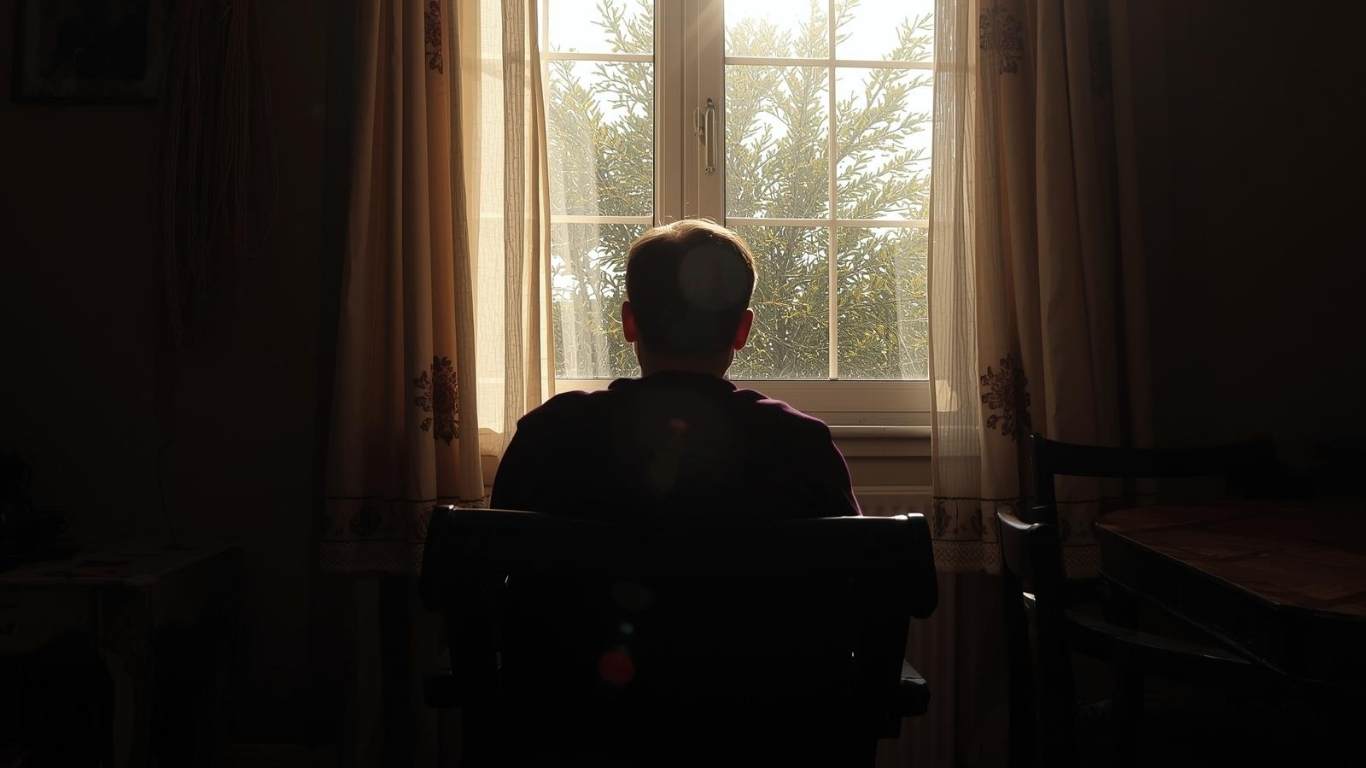
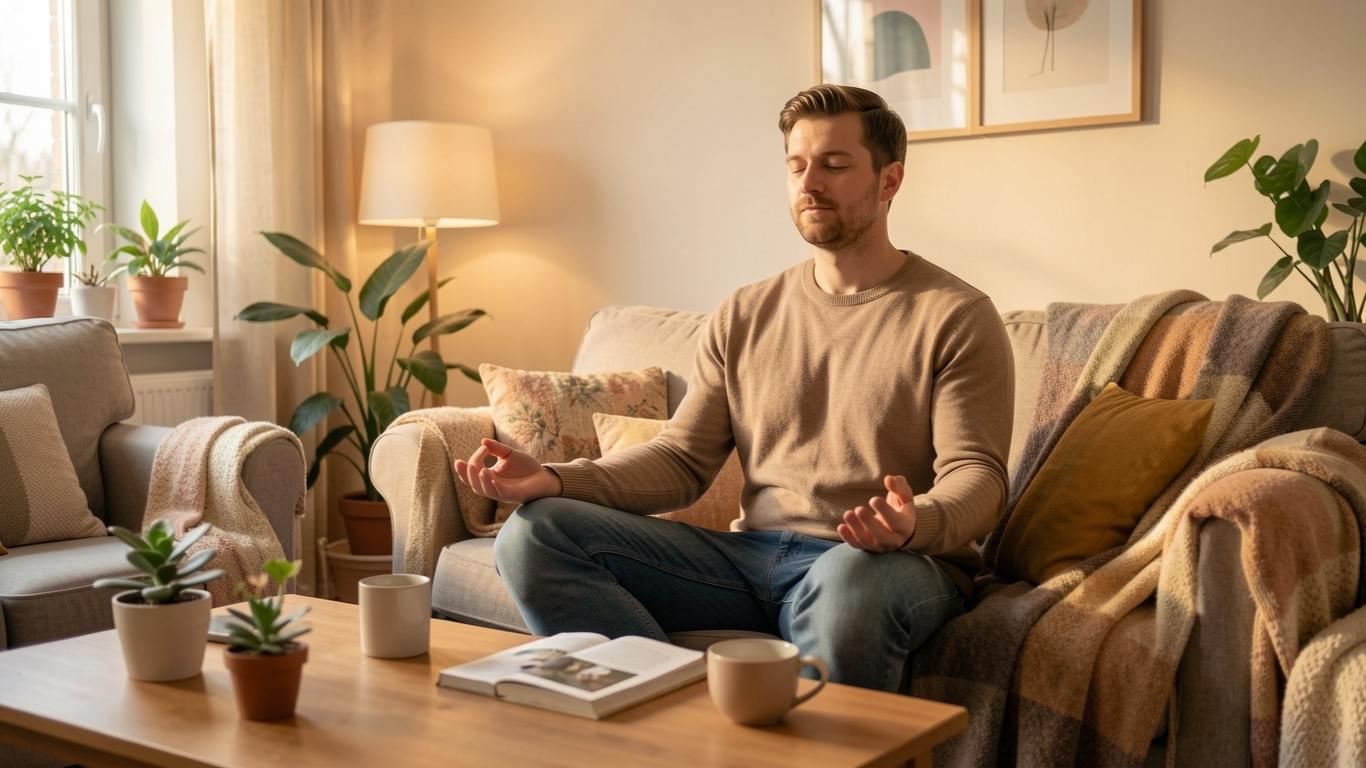
You’ve searched this question before. Maybe many times.
You already know the condition has a name.
You may even know the clinical definition.
What you want to know is how to treat agoraphobia, fast and naturally, and most important something that actually works — and you probably don’t want something that works in 24 months, you want something that works right now.
This guide covers all treatment options for agoraphobia.
What each one does. Where each one stops.
And why one approach — TM+IN Frequency Change — addresses the layer that all others miss.
If you’re in acute crisis right now, please contact us immediately.
Even if you’re not in an urgency, the Nesteal way is by far the fastest way how to treat agoraphobia right now!
What Agoraphobia Is — and What It Isn’t
Agoraphobia is an anxiety disorder defined by intense fear of situations where escape feels difficult or help might not come. Crowded spaces. Public transport. Open areas. Bridges. Supermarkets. Sometimes just the front door.
It is not a fear of the outdoors. It is not shyness. It is not a personality flaw.
It almost always travels alongside panic attacks and anxiety. The fear of experiencing a panic attack in public triggers avoidance. Avoidance reinforces the fear. The cycle closes tight — and the world shrinks.
The physical, emotional, and behavioural signs are real and wide-ranging: racing heart, shortness of breath, dizziness, the compulsion to know exactly where every exit is, the refusal to go anywhere unfamiliar, the inability to be alone in open spaces.
Left untreated, agoraphobia becomes its own prison.
The Standard Agoraphobia Treatments — Honestly Assessed
When you search for agoraphobia treatment options, you’ll encounter the same handful of approaches. Here is what each one actually offers.
1. Medication
SSRIs (selective serotonin reuptake inhibitors) and benzodiazepines are commonly prescribed for agoraphobia. They reduce the acute intensity of panic and anxiety, creating enough calm to function.
What they do well: Lower the volume on fear responses. Create stability for some people to begin engaging in other treatments.
Where they stop: Medication does not change the underlying pattern. It “manages” the alarm without rewiring the wiring. When medication stops, the fear returns, because the root problem was never addressed.
For many people, medication is also simply not an option. The side effects. The dependency concerns. The philosophical resistance to pharmaceutical long-term management.
2. Cognitive Behavioral Therapy (CBT)
CBT is the most evidence-backed psychological treatment for agoraphobia. Specifically, exposure and response prevention — gradually facing feared situations in a safe, structured way — has helped many people meaningfully reduce avoidance.
What it does well: Rebuilds rational relationship with feared situations. Gives people concrete tools to challenge anxious thinking. Creates measurable behavioral change over time.
Where it stops: CBT works at the cognitive level — on thoughts and behaviors. It asks: What are you thinking? Is that rational? What can we do differently?
But agoraphobia doesn’t ultimately live in the thinking mind. It lives in the nervous system. In the body’s automatic alarm response. In the stored emotional charge of every past panic experience.
Many people with agoraphobia have done years of CBT. They can explain perfectly why their fear is irrational. And they still can’t walk out the door.
“Even something as simple as leaving my house was difficult. I would not go to places I wasn’t familiar with.”
— Paula, Anxiety & Agoraphobia Client (Results are not typical and may vary. This testimonial represents an individual experience and does not guarantee specific outcomes .)
That’s not CBT failing. That’s CBT reaching its limit — the boundary between what the mind can reason and what the body still holds.
3. Online Therapy
Online therapy for agoraphobia removes one major barrier: the requirement to physically travel to a therapist’s office. For someone whose fear centers on leaving home, this matters.
What it does well: Provides CBT and talk therapy from a safe environment. Reduces logistical friction. More accessible than in-person care.
Where it stops: Online therapy is still therapy — it still works at the cognitive level. It improves access without changing the fundamental mechanism of the work.
4. Self-Help and Lifestyle Approaches
Breathwork, mindfulness, regular physical exercise, grounding techniques, and structured routine all support a reduced baseline anxiety level. Support groups reduce isolation, which frequently amplifies agoraphobia.
What they do well: Build resilience. Lower the nervous system’s resting activation. Create scaffolding for deeper work.
Where they stop: These are supportive, not transformative. They reduce the conditions in which fear thrives — they do not dissolve the fear pattern itself.
The Layer Every Standard Treatment Misses
Here is the honest truth about agoraphobia treatment that most resources won’t tell you directly.
All of the approaches above work above the root.
Medication works at brain chemistry. CBT works at thought patterns. Self-help works at habits and lifestyle. Each is a layer — and each is a layer above where agoraphobia is actually stored.
The fear isn’t an idea. It’s not a thought pattern. It is a somatic and energetic pattern — encoded in the nervous system through repeated experiences of panic, through unresolved emotional charge, through the body’s learned conviction that certain situations equal danger.
You cannot think your way out of a body-level alarm. You can reason with it. You can manage it. But managing is not the same as dissolving.
There’s also a deeper cost to long-term agoraphobia that most people don’t discuss. Chronic anxiety doesn’t just steal your freedom — it physically ages your brain. Years of nervous system dysregulation wear down cognitive function, memory, and emotional regulation. The urgency to address root causes isn’t just about quality of life. It’s about long-term neurological health.
What’s needed is an approach that targets the pattern where it actually lives.
TM+IN Frequency Change: The Treatment That Goes to the Root
TM+IN Frequency Change is Nesteal’s core method within the Soul & Body Frequency Change framework. It is not therapy. It is not meditation. It is not generic energy work.
It works at the energetic and somatic level — the exact level where agoraphobia patterns are stored and maintained.
Where CBT asks what are you thinking, TM+IN asks what is your body holding — and how do we release it?
How the Methods Compare
When the energetic charge underneath the fear dissolves, the fear loses its source. Not because you understood it better. Because the pattern generating it no longer exists.
This is why clients report shifts in the first session — not after months of work. When you address the actual cause, the results are immediate.
Why TM+IN Is the Ideal Agoraphobia Treatment Specifically
Most treatments have a paradox at their core: they require you to already be partially better before you can access them.
Going to a therapist’s office. Attending a group session. Traveling to a clinic. For someone with agoraphobia, these requirements are themselves the barrier.
TM+IN Frequency Change solves this completely.
Sessions are fully remote. You receive the work from home — from your safe space, with zero requirement to go anywhere first. And because energetic work is equally effective at a distance, nothing is lost by removing the physical barrier.
This isn’t just a convenience. For agoraphobia clients, it is the entire difference between being able to start and not being able to start.
“One client went to the mailbox for the first time in six months the day after her first session. Small steps become possible when the energetic roots of fear shift.”
— Nesteal Client, Agoraphobia (Results are not typical and may vary .)
What Happens in a TM+IN Session
Getting help for agoraphobia starts with a single session. Here is exactly what that looks like:
-
Honest intake conversation — What you’re experiencing, how long, what you’ve already tried
-
Pattern identification — The practitioner identifies the emotional and energetic pattern underneath the fear response
-
The TM+IN process — Working at the root level, not the narrative level. The body’s alarm system is addressed directly
-
The shift — Clients describe weight lifting, physical calm, emotional lightness they haven’t felt in years
-
You leave knowing — Within 60 minutes, you’ll know whether this is the approach that changes things
“After my first session, it was as if I had energetically erased all my fears and anxieties. The shift from fear to inner peace was almost immediate.”
— Jordana Van, Anxiety & Panic Client (Results are not typical and may vary .)
“I felt completely uplifted and hopeful — something I hadn’t felt in a long time.”
— Paula, Anxiety & Agoraphobia Client (Individual experience. Results vary .)
How to Treat Agoraphobia With TM+IN
TM+IN Frequency Change is a complementary service. It does not replace psychiatric care, licensed psychotherapy, or medication management.
What it does is provide the missing piece.
When you dissolve the energetic and somatic root of agoraphobia, everything else works better:
-
CBT lands differently — because the body is no longer fighting against the mind’s reasoning
-
Exposure therapy becomes possible — because the baseline charge has reduced
-
Medication needs may decrease — over time, and always in consultation with your doctor
-
Therapy progress accelerates — clients consistently report breakthroughs in traditional therapy after TM+IN sessions
Think of it as a holistic treatment for agoraphobia, one that addresses the whole person, not just one layer of the problem.
For those seeking a natural path to agoraphobia relief, without adding more medication or beginning yet another course of talk therapy. TM+IN is the approach worth understanding first.
What Makes TM+IN Different From Generic Energy Healing
Not all energy work is the same. There is a significant difference between general relaxation-based energy practices and TM+IN Frequency Change.
TM+IN is designed specifically as an alternative therapy for agoraphobia and related anxiety conditions. It is not wellness work. Not spiritual practice. Not relaxation massage rebranded.
It is precision work targeting the specific avoidance patterns, panic cycles, and nervous system encodings that keep people housebound. The practitioner understands the professional identity strain of agoraphobia — the career impact, the social isolation, the shame that accumulates when years pass.
This specificity is what separates a specialist from a generalist. After years of suffering, a specialist is what you need.
The Feel the Difference Guarantee
Nesteal guarantees one thing above all: you will know within your first session whether this works for you.
If you don’t experience a noticeable shift during your first TM+IN session, you receive a full refund.
No blind faith. No “give it twelve weeks.”
One session — and the answer is clear.
This is possible because TM+IN works at the root.
When you address what is actually generating the fear, the shift is felt as a physical and emotional reality — not as a concept.
Who Should Consider TM+IN Frequency Change
Overcoming agoraphobia without leaving home is not a fantasy. It’s the starting point for many TM+IN clients. This approach is right for you if:
-
You’ve tried CBT, exposure therapy, or medication — and something is still missing
-
You understand your fear rationally but cannot move past it
-
You are housebound and cannot access traditional treatment
-
You are skeptical of energy work but have exhausted conventional options
-
You want to address the root, not manage symptoms indefinitely
If you are in psychiatric crisis, please contact a licensed mental health professional or crisis line immediately. TM+IN Frequency Change is a complementary wellness service, not emergency mental health care. Although, we would love to help you with your crisis situation. We know how to treat agoraphobia almost instantly.
The First Step
Every treatment option described in this article has value.
CBT has genuine evidence behind it. Medication helps some people function. Online therapy removes real barriers.
But if you have tried those approaches — or if the very act of accessing them is blocked by the agoraphobia itself — then you are dealing with something that lives deeper than they reach.
TM+IN Frequency Change starts where they stop.
You don’t need to leave home.
You don’t need to take medication.
You don’t need to spend months wondering if it’s working – it works on the first session – or you don’t pay! That’s our guarantee!
Book your first TM+IN Frequency Change session at Nesteal.com.
Remote. Confidential. Guaranteed.