
Editor’s Choice: Key Stats (2025 Data)
🇺🇸 United States
-
An estimated 47.8 million Americans are currently suffering from depression, based on 2025 Gallup tracking data
-
18.3% of U.S. adults currently report depression — a historically high figure
-
Depression prevalence among U.S. adults rose from 7% in 2015 to over 11% in 2025 — a relative increase of nearly 60% per CDC analysis
-
13.1% of Americans aged 12 and older had depression in a given 2-week period during 2021–2023, per NCHS
-
1 in 10 U.S. adults now reports current use of antidepressants
-
37% of U.S. college students had symptoms of depression in 2024–2025
-
Youth major depressive episodes (ages 12–17) decreased slightly from 18.1% in 2023 to 15.4% in 2024
-
2.8 million youth (ages 12–17) experienced a major depressive episode with severe impairment in 2024
-
23.4% of U.S. adults experienced any mental illness in 2024 — over 60 million people
-
1 in 4 adults with any mental illness reported an unmet need for mental health treatment
🇬🇧 United Kingdom
-
1 in 5 adults (20.2%) in England are living with a common mental health problem, with rates higher in women (24.2%) than men (15.4%)
-
22.6% of adults aged 16–64 in England were identified with a common mental health condition in 2023/24 — up from 17.6% in 2007
-
1 in 6 adults in the UK experiences a common mental health problem such as depression or anxiety in any given week
-
28% of adults aged 16–29 in Great Britain experience some form of depression — the highest of any age group
-
Young adults aged 16–24 saw prevalence rise from 17.5% in 2007 to 25.8% in 2023/24
-
Women (19%) are more likely than men (14%) to report depression in Great Britain
-
Disabled adults are 5x more likely (35%) than non-disabled adults (7%) to experience depression
-
47.7% of adults with common mental health symptoms now receive treatment — up from 24.4% in 2007
-
The cost of mental ill health in England is estimated at £300 billion a year
-
Adults in the most deprived areas have higher rates of mental health problems (26.2%) than those in the least deprived (16.0%)
🌍 Global
-
More than 1 billion people worldwide are living with mental health disorders, per WHO September 2025 data
-
Global depressive disorder cases reached 332.4 million in 2021, accounting for 9.1% of all diseases
-
Between 1990 and 2021, the age-standardised burden of depressive disorders increased by 13.4%
-
By 2040, global depression cases are projected to exceed 466 million
-
The global burden is highest among females and the 10–24 age group
-
Middle and low-income countries contribute the majority of global depression cases and disability-adjusted life years (DALYs)
-
Depression and anxiety together inflict immense human and economic tolls on communities worldwide, per WHO
General Depression Stats and Facts
-
More than 1 in 8 Americans aged 12 and older has experienced symptoms of depression
-
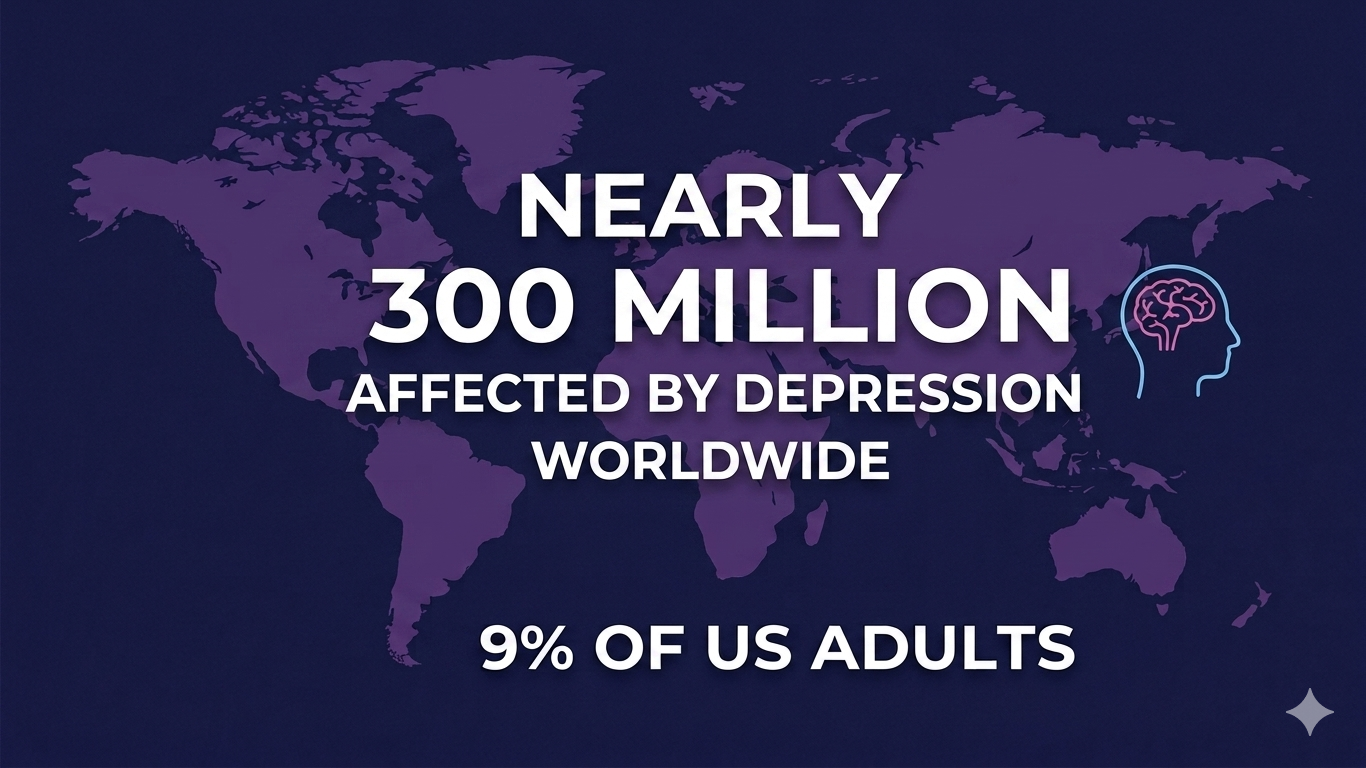
The global depression burden affects approximately 332 million people worldwide
-
In the U.S., an estimated 21 million adults had at least one major depressive episode in 2021 alone
-
Depression prevalence in the U.S. has nearly doubled since the early 2010s — a roughly 60% increase over the past decade
-
More than 18% of U.S. adults currently self-report depression, a historically high figure per Gallup
-
Figures as high as 22% of U.S. adults show depressive symptoms depending on the screening tool used
-
In 2021, the WHO reported approximately 5.7% of adults globally experience depressive disorder
-
Suicide is the third leading cause of death among 15–29 year-olds globally, closely linked to untreated depression
-
Major depressive disorder is among the top causes of disability in established market economies
-
Only 39–40% of individuals aged 12 and older with depression received counseling or therapy between 2021–2023
-
80% of holiday packages — In high-income countries, only about one third of people with depression receive any mental health treatment
Depression Statistics by Age and Sex
-
Women are approximately 1.5 times more likely to experience depression than men
-
Women’s global depression rate is 6.9% versus 4.6% for men
-
Young adults aged 18–25 now show some of the highest depression rates of any age group
-
Depression rates among young adults have roughly doubled since 2017
-
Around 18% of adolescents aged 12–17 experienced a major depressive episode in 2026 data
-
Persistent sadness among high school students remains near 40%
-
Adults aged 70 and older show a depression prevalence of around 5.9%
-
More than 10% of pregnant women and new mothers experience depression during the perinatal period
-
Middle-aged adults are more likely to take prescription antidepressants than younger adults, despite lower overall prevalence
Depression Statistics for Treatment and Care Gaps
-
Only about one third of people with depression in high-income countries receive any mental health treatment
-
In lower-income countries, treatment access drops significantly further below one third
-
Middle-aged adults are more likely to use prescription medication for depression than younger adults, per 2025 CDC data
-
The 988 Suicide and Crisis Lifeline and telehealth expansion have improved access, but rising demand has outpaced gains
-
Rural areas continue to face especially limited provider availability
-
Untreated depression is directly linked to an estimated 727,000 global suicide deaths in 2021
-
Untreated depression worsens outcomes for co-occurring conditions like cardiovascular disease and diabetes
-
Three primary WHO-identified barriers: insufficient investment, shortage of trained providers, and social stigma
Depression Treatment Statistics 2026
-
Cognitive behavioral therapy (CBT) is the most evidence-backed psychotherapy for mild to moderate depression
-
WHO-recognized first-line therapies include CBT, behavioral activation, interpersonal psychotherapy, and problem-solving therapy
-
SSRIs (e.g., fluoxetine) are the most commonly prescribed antidepressants for moderate to severe depression
-
Antidepressant use in the U.S. has grown steadily over the past two decades
-
Antidepressants are not recommended as first-line treatment for mild depression
-
The WHO advises antidepressants should not be used in children and should be used with caution in adolescents
-
Digital therapeutics — apps, online therapy, and guided CBT — now serve people with mild to moderate symptoms and access barriers
-
Support groups, both in-person and online, are recognized as a meaningful complement to formal treatment
How to Read Depression Data Correctly
-
Prevalence figures for depression range from 8% to over 20% in the same country depending on methodology
-
NIMH figures reflect clinically defined major depressive disorder; Gallup figures capture self-reported symptoms — neither is wrong
-
Key variables that change outcomes: time frame, question wording, sample size, age range, and screening tool used
-
The PHQ-9 is sensitive but not diagnostic — positive screens do not equal confirmed diagnoses
-
Cross-national comparisons are unreliable without accounting for whether countries use structured clinical interviews or symptom questionnaires
-
Always ask: What does the source mean by “depression”
Resources & Further Reading
U.S. Depression Data
Global Depression Data
Adolescent & Youth Mental Health
Treatment & Care Gaps
-
National Depression Hotline — How Many People Seek Treatment
-
Johns Hopkins — Bipartisan Struggles With Depression & Care Access
Clinical Definitions & Methodology

